German Lesson [the article this links to can’t be viewed completely without membership but the first words give you an accurate description] is a book by German author Siegfried Lenz.
The story is told by Siggi, a young man who is in juvenile prison shortly after World War II. There, he has to write an essay about “The Joys of Duty”. As soon as he starts to write, he is so overwhelmed by what he has to say that he can’t find a starting point and the German lesson goes by without him putting down a single word. Therefore the teacher sends him into solitary detention until he finishes the essay.
Siggi plunges into the story, a story about his father who is a police officer in a small town in Northern Germany and a painter who is his best friend. When WWII comes, a painting prohibition is set for the painter, Max Ludwig Nansen which has to be enforced by Siggi’s father, Jens Ole Jepsen. Jens takes this responsibility very seriously, Max can’t stop painting – and Siggi is always caught in the middle.
It really is a wonderful book, especially the language Lenz uses is just amazing. Just one minor criticism: I don’t think that any 20-year-old, talented as he may be, could use it like that. But who cares.
The story is intelligent and he manages to give you a sense of every character. It takes some time to read because it gives you so much to think about. But nothing beats the language in this book.
My recommendation: You should definitely read it! But take your time when doing it.
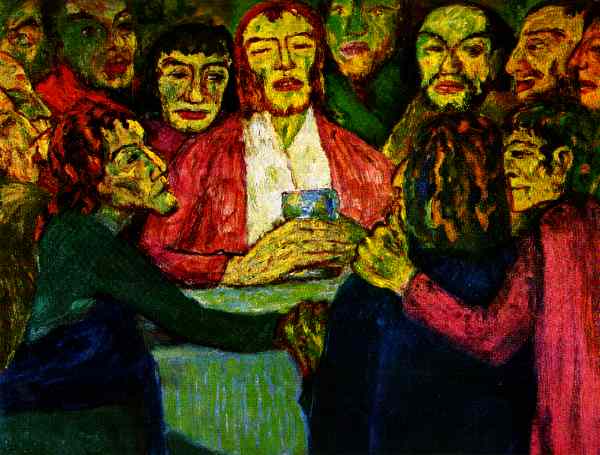
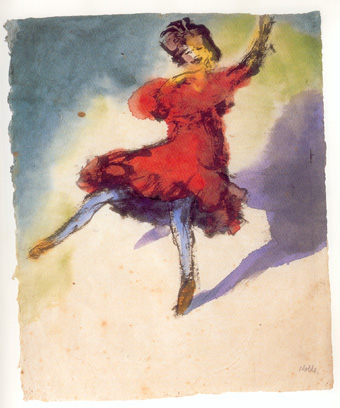
Max Ludwig Nansen is based on Emil Nolde, a German expressionist. Lenz succeeds in describing the pictures of this painter so well that I could actually see them without knowing who the character and his painting style were based on.

 kalafudra's Stuff

HAPPY BIRTHDAY!
… I also loved the descriptions of Nolde’s paintings. I’m very fond of Nolde, his pictures are so vivid. If you ever get to know Thomas Crowne, tell him about it.
I like Nolde, too. You are right, the pictures are very vivid. And emotional.