[Part of the Science Fiction special in the Vienna Filmmuseum. They showed the film in comibination with Deimantas Narkevičius’ Revisiting Solaris in his presence and in the presence of Natalya Bondarchuk. Both also gave short talks about the respective films.]
Solyaris is Andrey Tarkovskiy‘s arguably most famous movie, based on the novel by Stanislaw Lem, starring Donatas Banionis, Natalya Bondarchuk, Jüri Järvet and Vladislav Dvorzhetsky.
Plot:
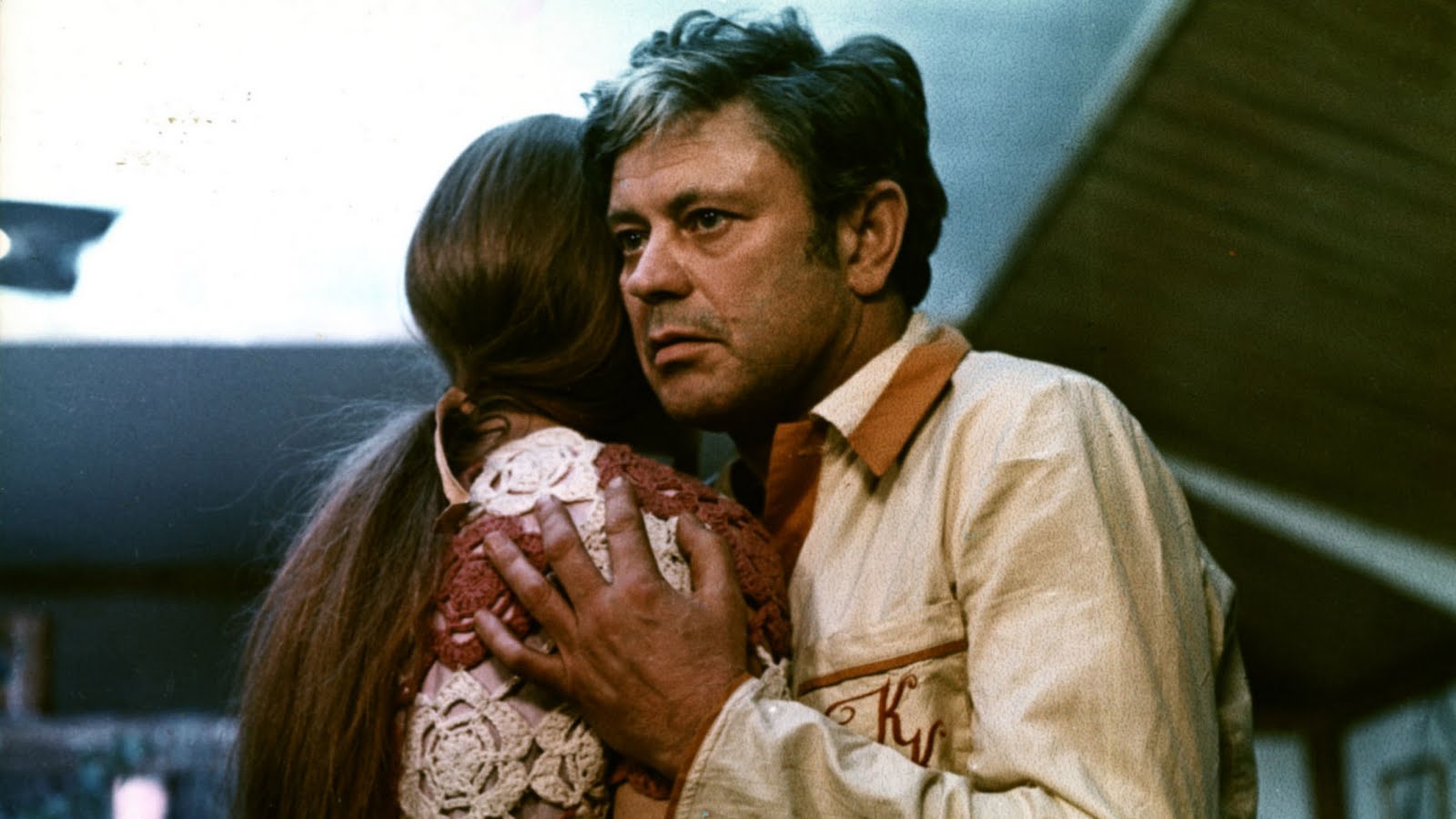
The psychologist Kris Kelvin (Donatas Banionis) is sent to a space station which orbits the planet Solaris. Weird things have been happening there and Kelvin is supposed to look into it and see what’s going on. His assessment will decide whether the whole Solaris project should be continued or not. As soon as Kelvin arrives on the space stations, he finds his dead wife Hari (Natalya Bondarchuk) in his bed: apparently Solaris is trying to communicate with him through her.
Solaris is a very slow movie with a lot of seemingly unrelated sidenotes and little dialogue. This does not make for easy viewing and it will probably never become my favorite movie, but it was good to have seen it anyway. If only for Natalya Bondarchuk.

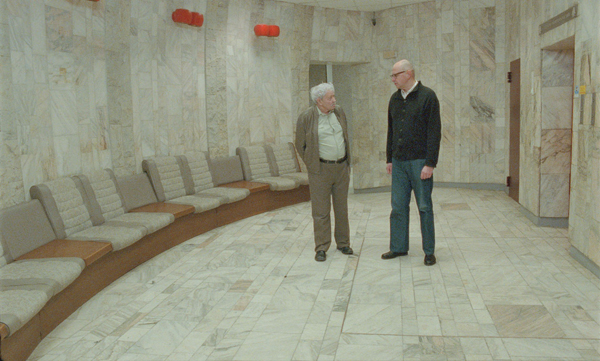
Before they showed the film, they also played the short film Aplankant Soliari (Revisiting Solaris) by Deimantas Narkevičius. In this film, Donatas Banionis reprises his role as Kris Kelvin and its kinda Narkevičius modern interpretation of Solaris with the same main character. The movie combines the actual film with turn of the century photos of the landscapes where Tarkovskiy’s Solaris was shot. There are also pretty long voice overs with (I think) passages from the book.
Put altogether it was an interesting movie, but there was an interview with Deimantas Narkevičius before the film, then they showed the short film, then they interviewed Natalya Bondarchuk and only then did they show Solaris, which itself is almost three hours long and it all got a little too much for one evening and one could have done without the short film, too.
 [Revisiting Solaris]
The interview with Natalya Bondarchuk was pretty interesting, too. She talked about how she gave Tarkovskiy the novel, how they filmed the crashing-through-the-door scene (they had two doors prepared and she got stuck the first time). She also talked about the meaning of Solaris. She got a little too spiritual there for my taste, but it was nevertheless interesting. [Also, I understood some of the things she was saying in Russian, which is all kinds of awesome since my Russian sucks. And new vocabulary of the day: бессмертный (bezmertniy), meaning immortal.]
But back to the film. It proceeds at an incredibly slow pace, infers a lot it never spells out and throws big concepts around. In short, it does everything to make it hard to watch. Which on the one hand is very nice to get for a change: a movie that doesn’t treat you like you’re stupid. On the other hand, it’s also really exhausting. [I haven’t read the book but I think that I would like to get all the ideas that were in this film in the written form. That way I could take it in better.]
You might get from it, if you watched it a second time, but actually, the movie did not fascinate me enough to make me want to see it a second time. So I guess I’ll leave it at that.
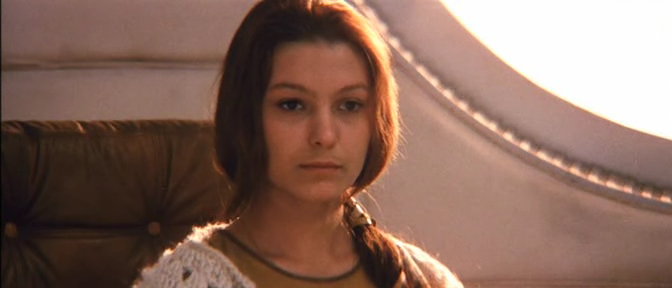
Natalya Bondarchuk was wonderful as Hari – a very gripping performance. But in the end, her performance and the wonderful visuals of the film were all that really impressed me about the film. It just got too long and boring and convoluted.
Summarising: If you’re especially interested in Science Fiction, Film or both, I guess it’s a must-see. Otherwise, skip it.
 kalafudra's Stuff
[…] are bits and pieces of 2001: A Space Odyssey, Moon, Wall-E, War of the Worlds, Independence Day, Solaris – to name but a […]