Jimmy’s Hall
Director: Ken Loach
Writer: Paul Laverty
Based on: Donal O’Kelly‘s play
Cast: Barry Ward, Simone Kirby, Andrew Scott, Jim Norton, Brían F. O’Byrne, Aisling Franciosi
Plot:
Jimmy Gralton (Barry Ward) returns to Ireland from the USA where he had to flee after opening a community dance hall that went against everything Father Sheridan (Jim Norton) stood for. Now he’s back and actually wants to take it slow. But the demand for the hall is still there and Jimmy is too invested in the original idea not to give it another shot. Since Ireland is in the middle of the communist scare and this dance hall a decidedly socialist project, Jimmy is bound to make some enemies again.
Jimmy’s Hall is a beautifully shot, engaging and political film set in Ireland – so pretty much what you’d expect from Ken Loach (though he sometimes makes films that are set in the UK as well). And that’s a very good thing.
The politics of the film are so much at its heart and center that people who can’t at least see the romanticism in communist ideals as something positive will be completely at a loss with it, I think. Even though “the other side” in form of the church gets its say and both Father Sheridan and Father Seamus (Andrew Scott) are not completely unsympathetic figures, it is obviously portrayed as “the other side”. They also have good arguments, but we are right.
Most of that is down to the script, of course, but the script wouldn’t have worked without the presence of Barry Ward – who is just as charming and charismatic as you’d expect a community leader to be. In a way the audience follows his lead just as the community does.

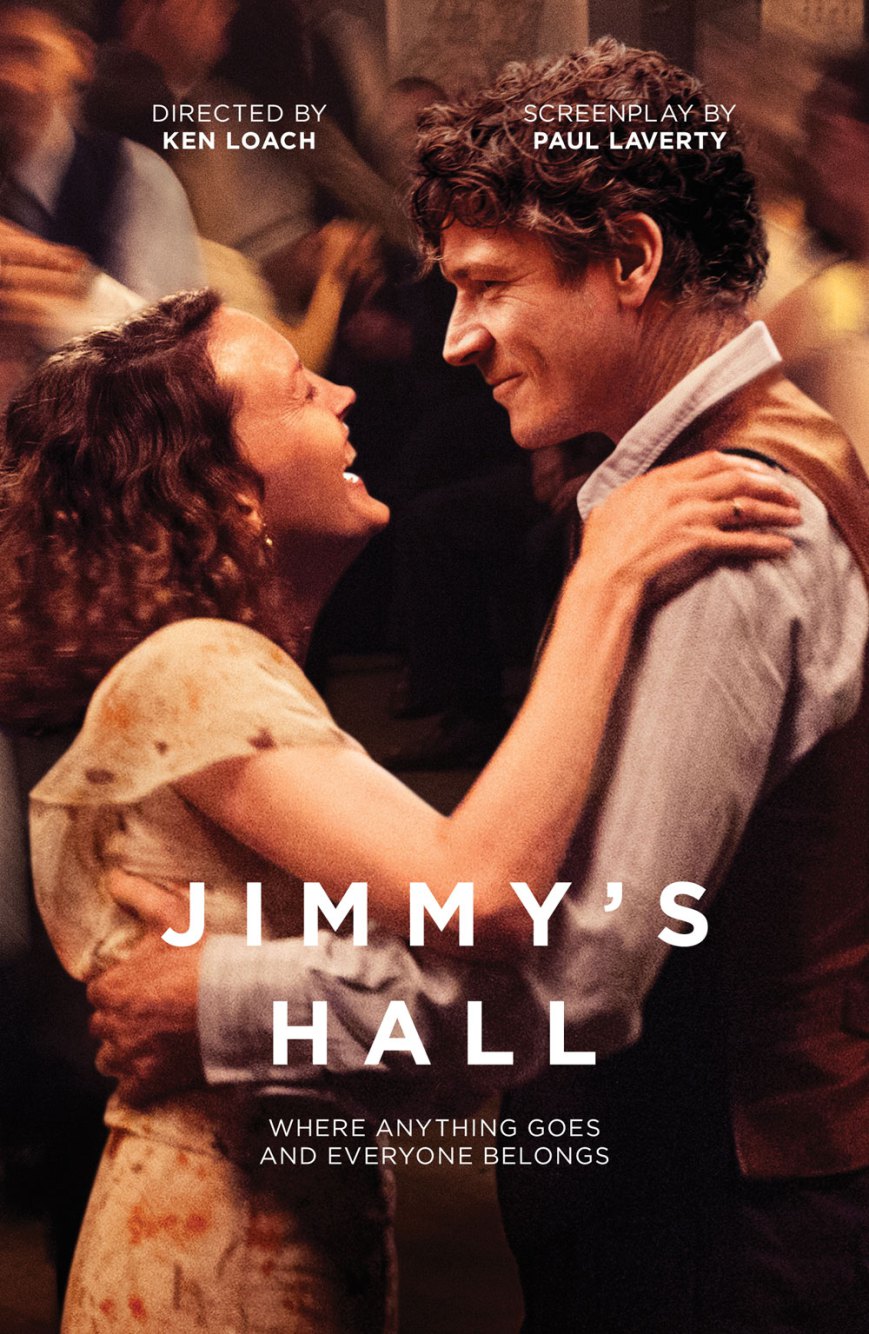
But politics isn’t the only thing the film is good at. Jimmy’s relationship with Oonagh (Simone Kirby) is just as romantic as their ideals, only much sadder. It all culminates in a dance scene that is breathtaking and heartbreaking. It was perfectly set in scene.
Plus, Jimmy’s mother was great, too.
The ending is a little bittersweet and the general injustice of the situation never really resolved. The film hurries through the last bit and that’s probably where it’s at its weakest, neither giving you solutions nor enough time to really feel the fucked-up-ness of the situation. But that doesn’t mean that it isn’t worth it.
 Summarizing: Definitely recommended.
 kalafudra's Stuff