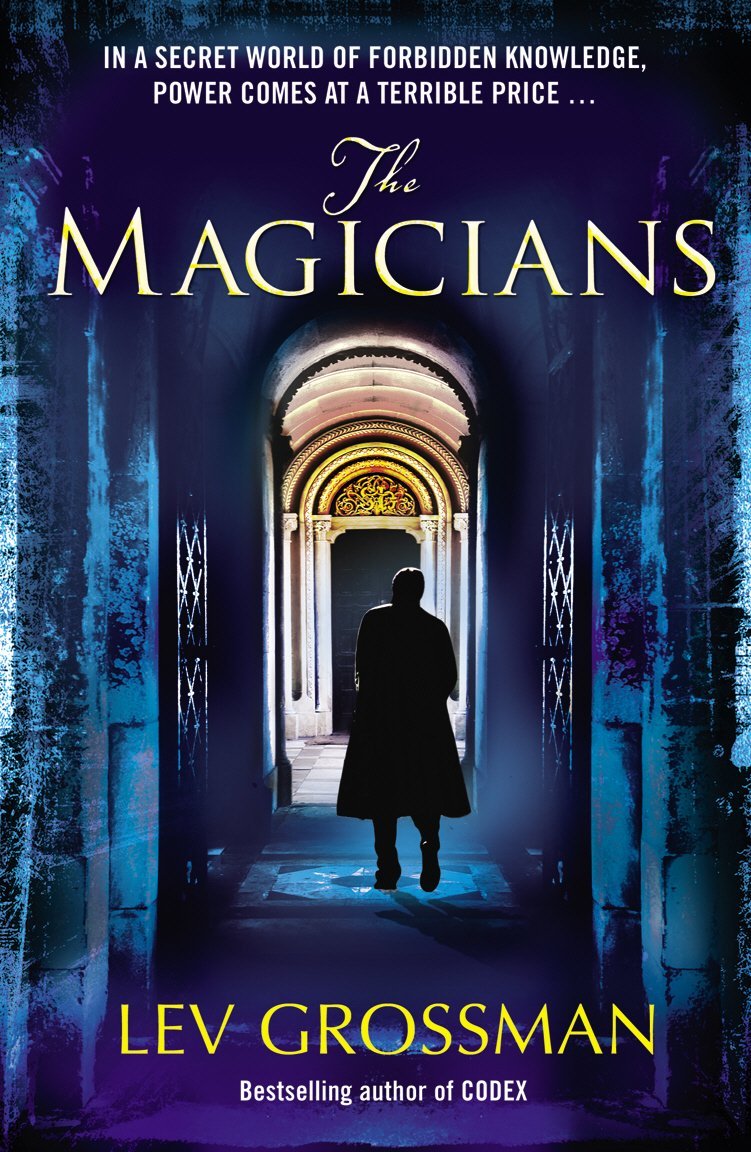
The Magicians is the first novel in the Magicians Trilogy by Lev Grossman.
Finished on: 1.6.2015
Plot:
Quentin has always felt like he didn’t really belong in this world and has dreamed of magical worlds like the one in Fillory. But now his college time is fast approaching – usually the time to give up such dreams. But by chance, or rather by destiny, Quentin comes to Brakebills – a magical college. Delighted to discover that magic is not only real, but that he can learn it (even if it’s a whole lot of work), Quentin leaves his old life behind and throws himself into his studies and makes new friends. But if magic itself is real, maybe so is Fillory?
I heard many good things about The Magicians, with reviewers falling more or less over each other to praise it. But personally I was less than taken by it. I really don’t see its greatness.
[Slight SPOILERS]
The Magicians sounds good in theory: disillusioned magicians; turning Narnia on its head; going away from the world of easy fantastical magic to a world where magic is hard work and quite trite. In short, taking off the rose-tinted glasses when it comes to (a special kind of) fantasy and injecting it with a healthy dose of realism.
But in practice, it doesn’t ever come together, at least not for me – and I think that’s because I absolutely hated Quentin. It starts with the fact that he is in love with his best friend, even though she’s dating his other best friend, and feeling basically friendzoned for it. It doesn’t get better when he cuts off his entire old life without a second glance at all – once he’s at Brakebills he doesn’t speak to his old friends anymore (even though 5 pages ago they were his life) nor his parents (because they don’t care about him and they don’t love him anyway, they are way too occupied with their own lives – and I’m sorry, but I don’t really buy that). The many years of ennui Quentin experiences didn’t improve my opinion of him either: poor Quentin! He’s rich, smart, white, cis, able-bodied, male and a fucking magician, but he just doesn’t know what to do with himself, so we better feel sorry for him.
Then there’s some throwaway line that unhappiness is the source of magic and I wanted to strangle them for that theory. It’s like saying mental illness is the source for creativity. It’s not. When you’re not doing okay – because you’re unhappy or because you’re depressed – it will mostly get in the way of everything else, not help it along.
But those aren’t the only things I had issues with. All the female characters in the book sucked, except for Alice, who was the shining beacon of perfect womanhood – and was promptly fridged, thank you very much. And as much as I loved that there was at least a gay person represented in the book, since the introduction into Eliot’s sexuality was a) graphic, b) kinky and c) said kink portrayed as super-weird and the result of a psychological issue, it conflated homosexuality and super-weird sex, which I could have done without. [I don’t know if that’s better or worse than the fact that I can’t recall a single person of color in the book. In New York. At a college that services the entire USA (or at least the entire east coast).]
With all of those issues, I already wasn’t convinced by the book. So the fact that it was too long and for long stretches plain boring barely factored into my annoyance with it. It’s safe to say that I very much doubt that I will continue to read the series.
Summarizing: It’s a shame that there wasn’t more done with the excellent idea.
 kalafudra's Stuff