Deathless is a novel by Catherynne M. Valente, based on the Russian fairy tale of Koschei the Deathless.
Finished on: 13.7.2024
Plot:
Marya Morevna watches as three birds in three consecutive years fall from a tree in front of her house, turn into men, and marry her older sisters. So, she is just waiting for her turn, wondering what kind of bird will come for her. But while she waits, Russia changes, communism rises and their house is big enough that they share it with 11 other families now. When it is her turn to be picked up by her future husband, Marya doesn’t see, but she still goes with him – none other than Koschei the Deathless himself.
Deathless is a beautifully written, emotionally devastating story that manages to capture something complicated that feels true, but leaves you with a lot of room for discussion what it exactly it is. It is an astounding novel.
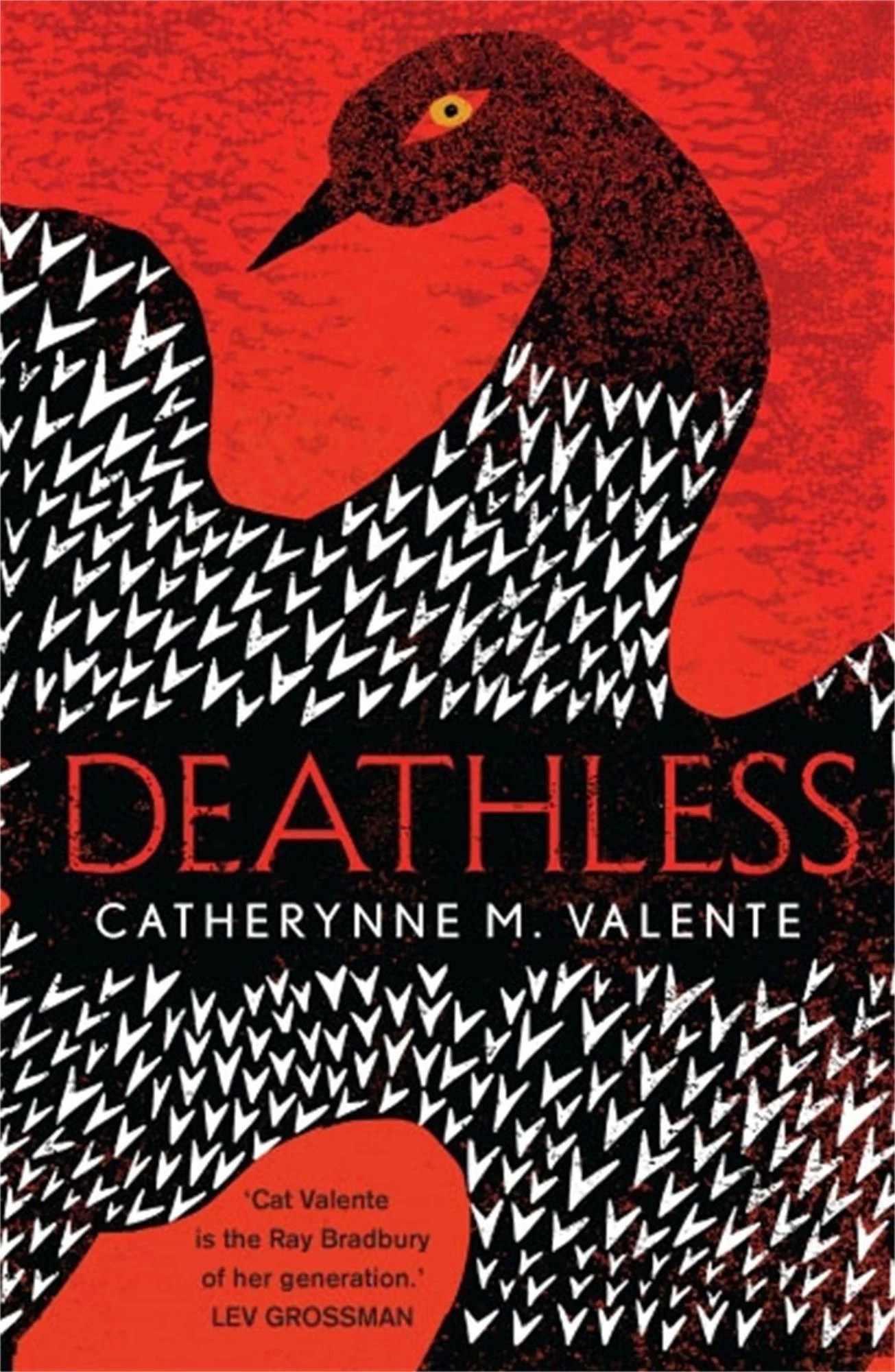
For a novel written by an US-American, Deathless manages to feel absolutely and quintessentially Russian and that is pretty amazing. (From the author’s note I gather that Valente is married to a Russian, so that probably helped.) (Yeah, I’m trying not to throw shade at Bardugo again, but failing.) Not only does she nail the kind of tone about the Soviet Union that Bulgakov has, and makes it work for me. Not only does she do the fairy tale characters here justice, despite making them her own. No, what’s more, she pinpoints the Russian way of looking at the world, always atuned to suffering and sadness.
Valente deftly mixes fairy tales with Soviet realites and satires thereof. As much fun as she pokes fun at the Soviet Union (even the house elves form committees and Baba Yaga becomes Comrade Yaga), she is also very clear about the atrocities committed in the name of communism, and about the harrowing effects of the Second World War and the Leningrad Blockade.
Amid it all, the fairy tale characters, structures, genre conventions are included, examined, questioned and accepted as fact. This is mirrored in Valente’s writing style that often becomes almost lyrical with repetitions as we are used from fairy tales, but also quotes Soviet political slogans with ease.
Marya is a great character, and her relationship with Koschei is absolutely complicated, filled with something so private that you barely dare, as a reader, to try to understand it completely. Maybe you can’t, even. I, for one, was content to leave it be un-understood in part.
More often than not, when something is called ambitious, it is because it tried something but didn’t quite manage it. In this case, Valente makes good on her ambitions and really delivers with Deathless.
Summarizing: Fantastic.
 kalafudra's Stuff