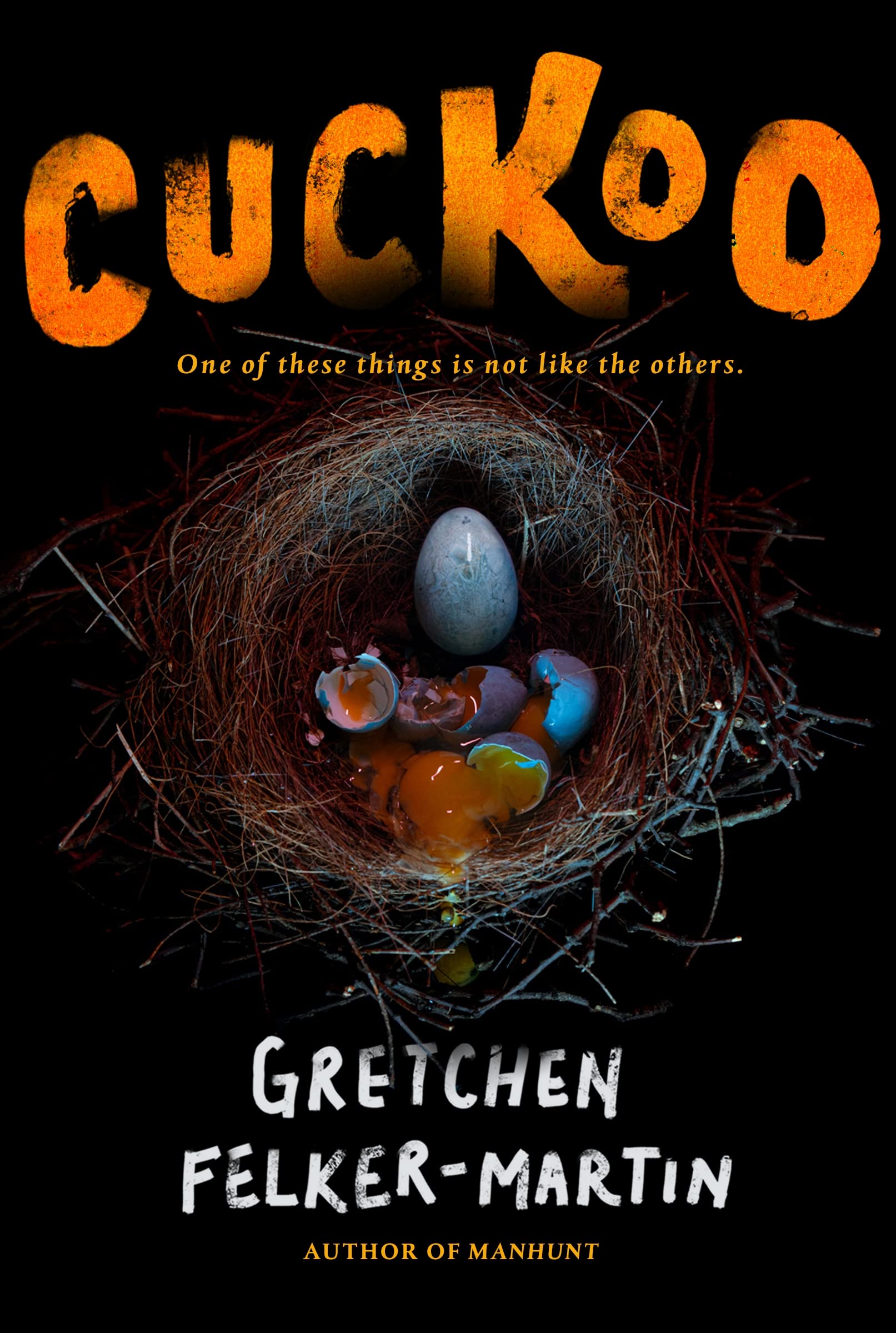
Cuckoo is a novel by Gretchen Felker-Martin.
Finished on: 2.4.2025
Content Note: conversion camps, (critical treatment of) queermisia in all forms, fatmisia
Plot:
In 1995, Camp Resolution hosts a group of queer teenagers, all abandoned there by their parents who wanted them to stop being queer. They survived the camp, but it was a close call. There is something beneath the camp, something evil, and it has left none of them unmarked. Sixteen years later, it is up to them to face that evil once more and attempt to stop it once and for all.
Cuckoo combines a creepy idea (a fictitious monster I won’t spoil) with another creepy idea (a very real form of abuse, conversion camps) to make something that is wholly its own thing. It doesn’t get the pacing right and is a little cumbersome at times, but it is still interesting and engaging enough to make it worth it.
I was a little worried that Cuckoo and Camp Damascus would resemble each other too much, but any likeness starts and stops with „queer horror novel set at a conversion camp“, though both also share a good dose of queer rage. But everything is expressed very differently in both novels. If I had to boil it down to a couple of points, Camp Damascus is breezier, more like a teenage slasher, while Cuckoo is gorier and leans towards cosmic horror. Camp Damascus might be easier to like, Cuckoo is more of an acquired taste.
But enough about Camp Damascus! Unsurprisingly after Manhunt, Cuckoo is one hell of a horny book, it’s also rather dirty in the literal sense and it is definitely gory. The concept here, the big bad, is absolutely gross and definitely interesting and creepy.
Cuckoo gets off to a slow start, introducing us to many characters. I found the sheer number of people to keep straight in my head (no pun intended) a little overwhelming at first, but once I had the characters down, it worked pretty well. But it is a somewhat clunky book that feels heavier than it should. I would have appreciated a faster pace and a more fluid reading experience.
I loved that the book concentrated on trans perspectives among the queer kids, giving us a multitude of experiences instead of pretending that transness is a monolith. It’s insightful and simply engaging for me as a cis reader. I expect that for a trans reader, it is very validating to not have to make do with one solitary trans person in a story.
As a fat person, it wasn’t always easy to deal with the (mostly internalized) fatmisia that is pretty much everywhere in the book. It is obviously not there to reinforce those ideas, but I didn’t feel that it was challenged enough. I often felt thrown back into my own struggles with my body that I have left behind for the most part. It is realistic, that’s for sure, but simply stating those fat-hating thoughts feels more like re-enactment than actual dealing with.
Despite a couple of weaknesses, Cuckoo is definitely out there enough to make it worth reading even if you feel that you are well versed in the genre. It openly acknowledges important influences from horror history, but it is its own thing – with a queer slant.
Summarizing: a bit slower than ideal, but still a good read.
 kalafudra's Stuff