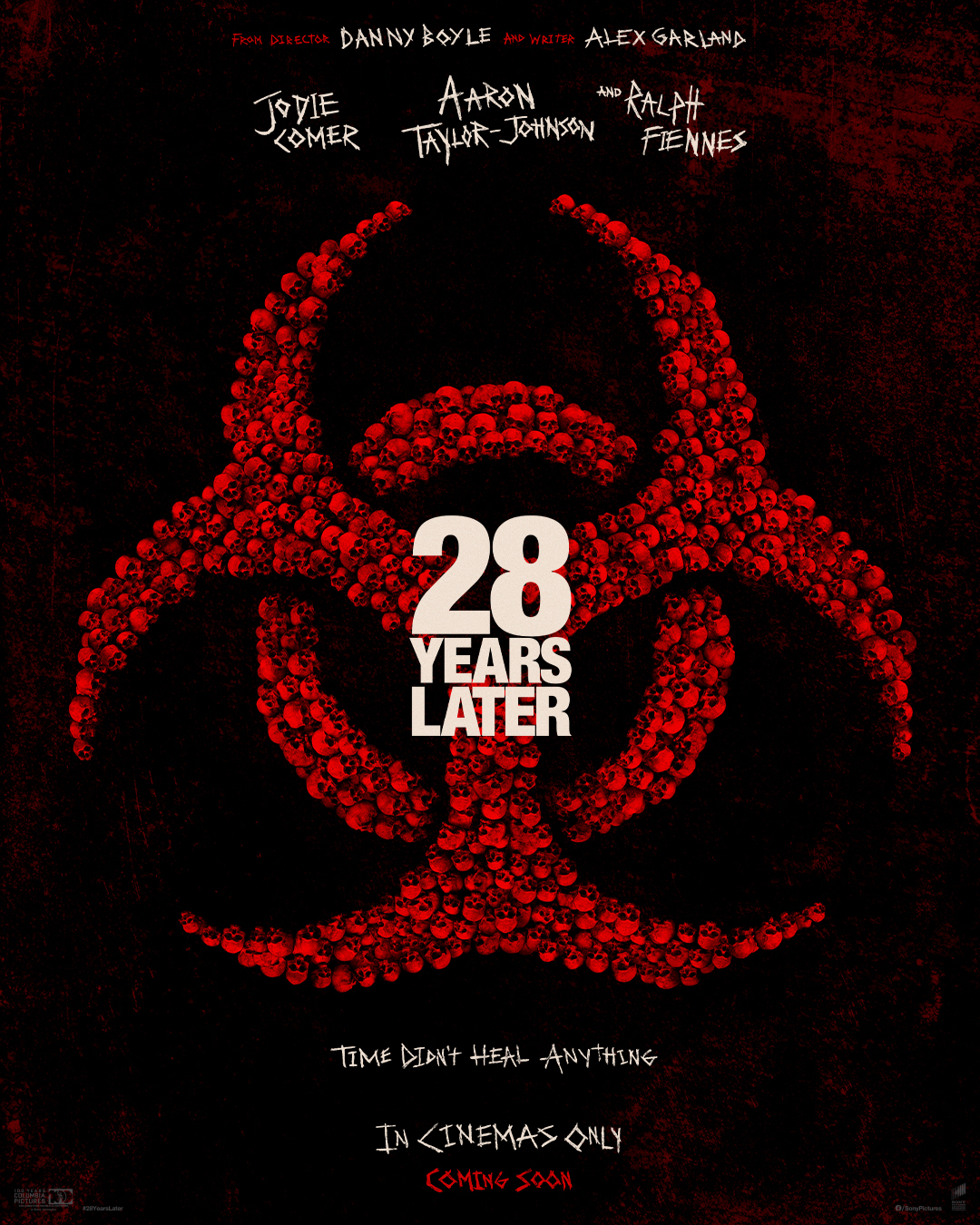
28 Years Later
Director: Danny Boyle
Writer: Alex Garland
Sequel to: 28 Days Later…, 28 Weeks Later
Cast: Alfie Williams, Aaron Taylor-Johnson, Jodie Comer, Ralph Fiennes, Edvin Ryding, Jack O’Connell
Seen on: 27.6.2025
Content Note: racism, fatmisia
Plot:
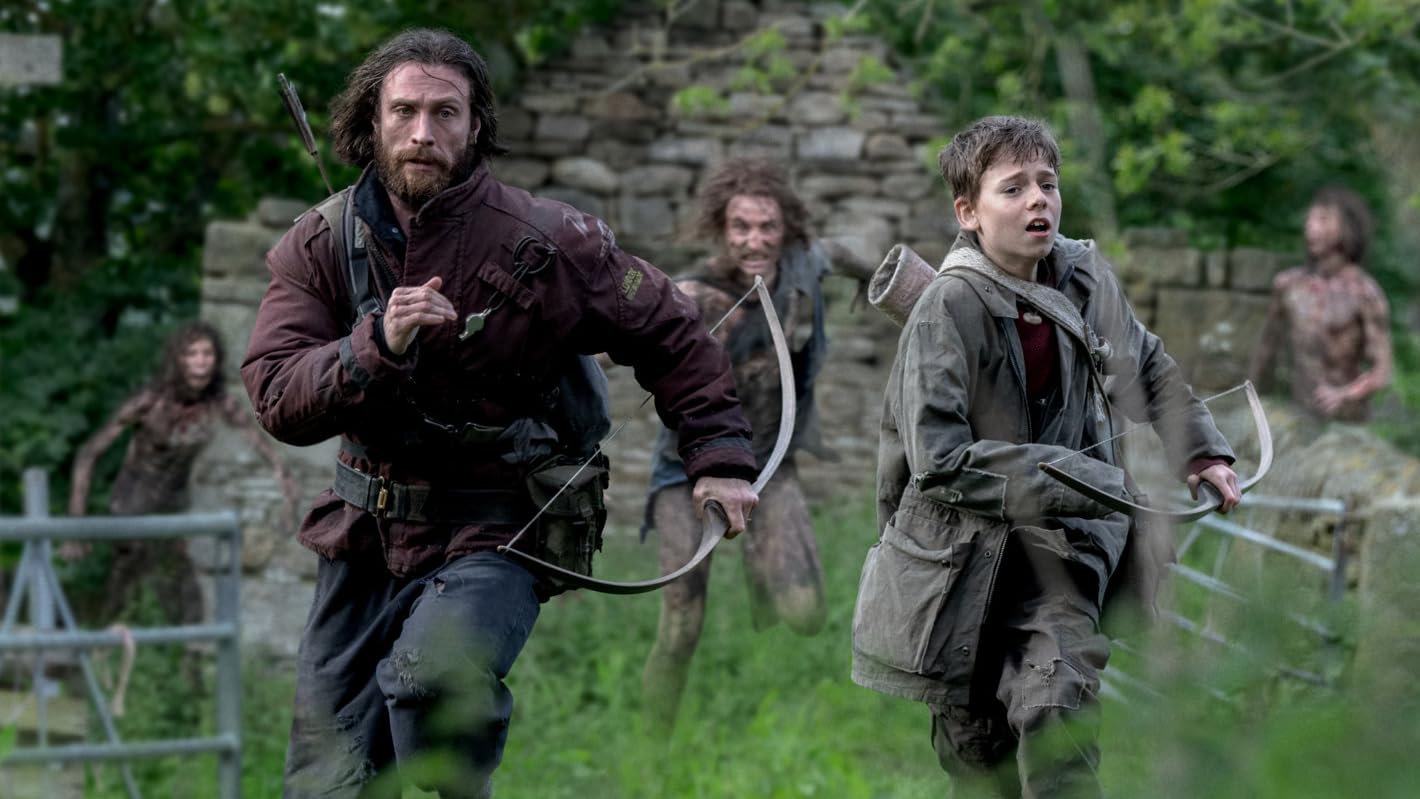
28 years after the outbreak of the rage virus, the UK is still quarantined. There are only a few unaffected survivors. Due to the luck of living on an island, Spike (Alfie Williams) and his family are among those survivors, basically a quarantine zone within a quarantine zone. Spike’s father Jamie (Aaron Taylor-Johnson) is about to go to the mainland with Spike for the first time. It is there that Spike sees a fire, and hears of a doctor who may or may not have gone off the deep end. For Spike, though, this doctor may be the one thing that could save his mother Isla (Jodie Comer) who has become more and more erratic in the past few years. He decides that they need to give it a try.
28 Years Later is interesting in many ways, and a clusterfuck in other ways. I was engaged the whole time, but there is a lot to be criticized, too.
[SPOILERS]
Alex Garland has a hand for doing interesting things with our concepts of masculinity, and he does so again here. Jamie is a man’s man, your typical action movie hero (even though he, too, does more than most when it comes to care work, albeit due to circumstances). But the movie pretty quickly breaks with that notion when it shows Alfie’s utter alienation with Jamie after they return from the mainland. Alfie is shellshocked, he doesn’t care for the heroic tale that Jamie is trying to spin. This sense of alienation is again reinforced when Spike and Isla meet the soldier Erik (Edvin Ryding) who tries to make the hegemonic masculinity concept work for himself.
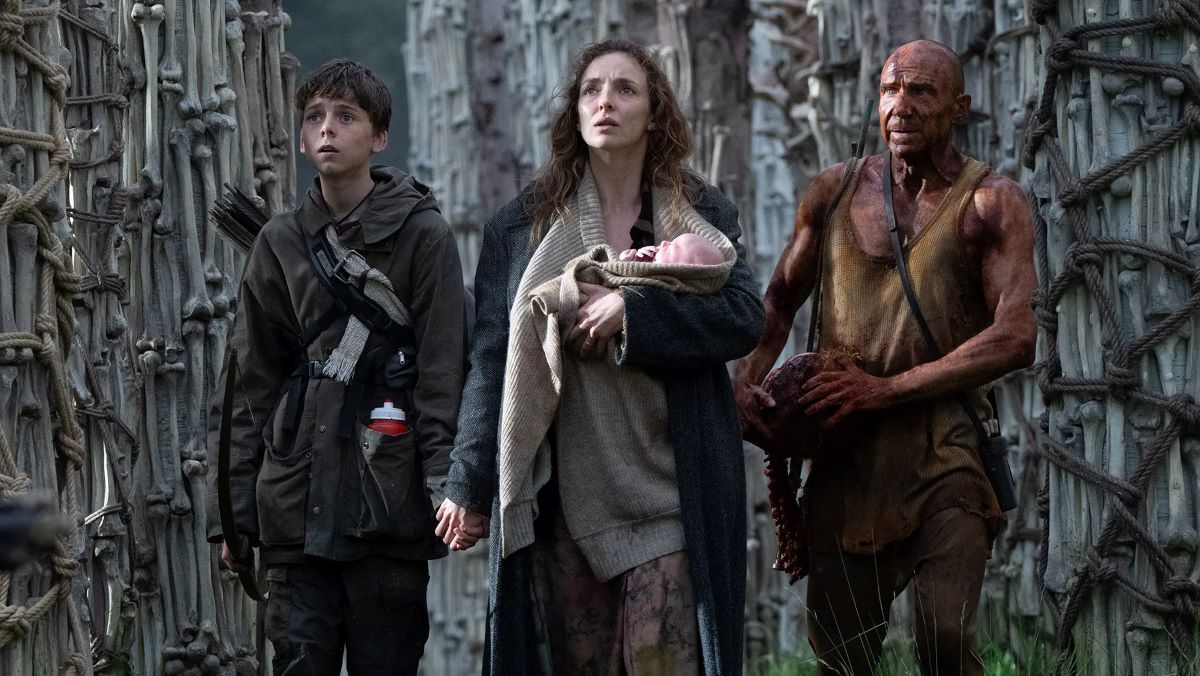
Spike finds a man he can look up to in Dr. Kelson (Ralph Fiennes), a social outcast who spends all of his time creating art and do the emotional labor or mourning that has become practically impossible for most. He is a physician who takes Isla’s bodily autonomy absolutely seriously by both respecting her choices and very carefully asking for her consent before touching her. In short, he is pretty much everything that we are told men are not.
I found this absolutely fascinating and worth thinking about. But then, unfortunately, the movie turns to a plot it teased earlier (and a sequel that is coming next year) and that jumped the shark a little for me. I also wouldn’t have minded if the women in the film had gotten the same care as the men. And finally, making the only people of color in the film zombies is a really, really, really bad look. As is the fat bodies are used for dehumanization and horror here.
Stylistically, Boyle does some interesting.things, especially in a scene where he combines historic footage with excellent sound design to create a sense of urgency that is really outstanding. But again, with the twist at the end, the film feels a little more been there done that than it should. I’m interested enough that I will probably still watch the sequel, but I think without that part, the film would have been stronger.
Summarizing: interesting but very flawed.
 kalafudra's Stuff
[…] Bone TempleDirector: Nia DaCostaWriter: Alex GarlandSequel to: 28 Days Later…, 28 Weeks Later, 28 Years LaterCast: Jack O’Connell, Alfie Williams, Ralph Fiennes, Chi Lewis-Parry, Erin Kellyman, Emma […]