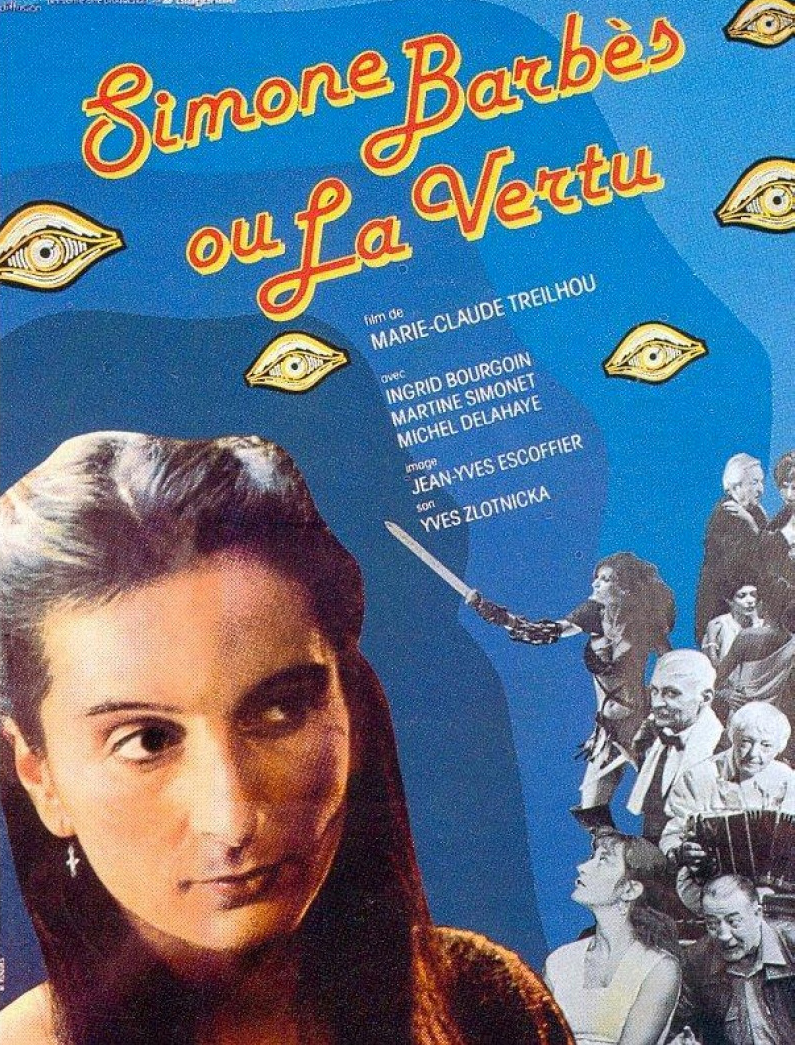
Simone Barbès ou la vertu
Director: Marie-Claude Treilhou
Writer: Marie-Claude Treilhou, Michel Delahaye
Cast: Ingrid Bourgoin, Martine Simonet, Sonia Saviange, Max Amyl, Noël Simsolo, Pascal Bonitzer, Michel Delahaye
Seen on: 29.11.2025
Plot:
Simone (Ingrid Bourgoin) and Martine (Martine Simonet) work as ushers in a porno cinema. As Simone is ending her shift and Martine is beginning hers, the two chat before Simone moves on to a lesbian bar where her girlfriend works. But this won’t be her last stop of the night.
Simone Barbès is by turns funny and tender. Like Simone herself, the film calls out bullshit, but then also turns back to kindness over and over again. I really enjoyed it.
Simone Barbès is an interesting film, so character- and dialogue-driven it may as well be a play. It consists only of three scenes, and the cinematography and editing are rather calm, making me imagine how one could adapt the film to stage (not usually something I am concerned with). That is not just an indication of the way it was made, but also of the fact that the material still spoke to me.
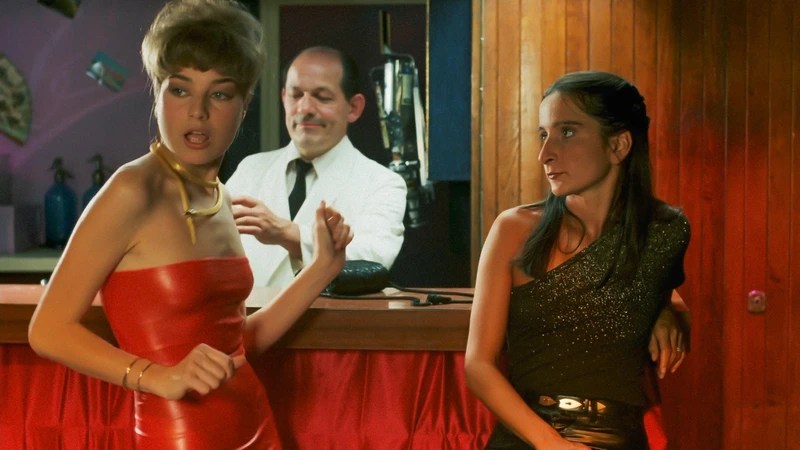
The dialogues are witty and often funny. As they take us from scene to scene, we also get to peel back Simone’s layers. In the porno cinema (with some very entertaining customers) she seems almost unflappable as she rebuffs the visitors in many ways, and dispenses advice to her colleague. At the lesbian bar, we get to see a more vulnerable side. She knows that things are not equal between her and her girlfriend, but she seems to have accepted that she can’t change her feelings. Caught between pragmatism and heartbreak, she only gives herself that much room for the latter. In the final scene where she accepts a ride from a stranger (Michel Delahaye), or rather takes over the wheel of his car to give him a ride, she never relinquishes control, but there is still a vulnerability that shines through that we didn’t really get to so far.
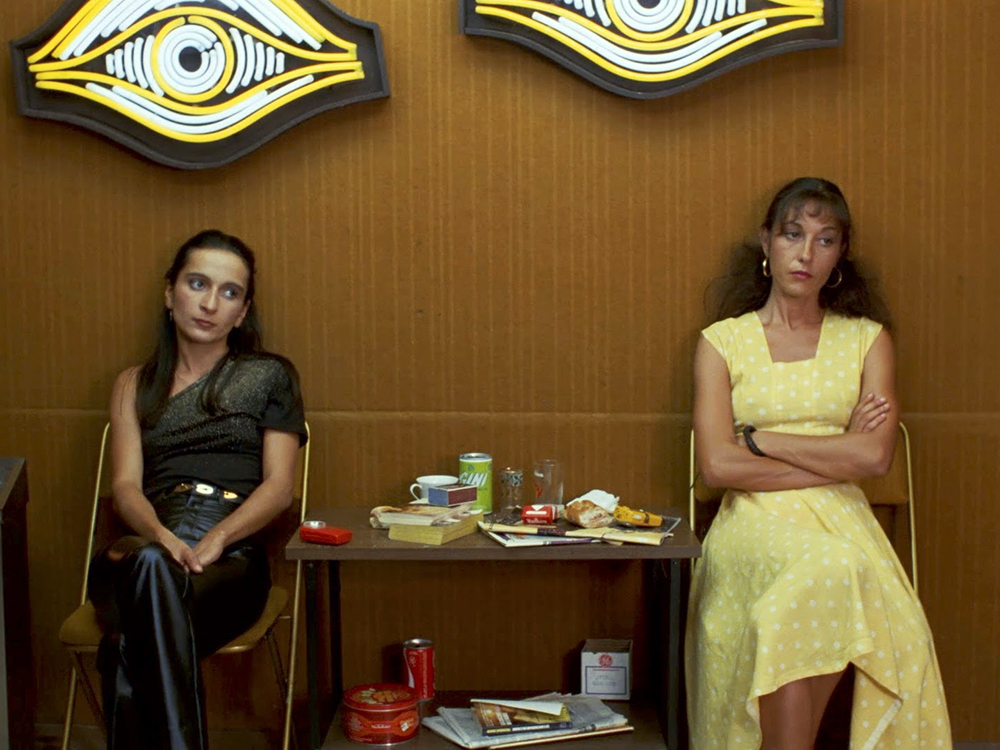
Bourgoin does a great job in the role and gives Simone a great sense of energy as she moves through the night. The characters around her mostly make only short appearances, but they are pretty fun. Plus, this structure gives us a glimpse of the queer (sub)culture at the time, including amazons and punk rock, and that is always interesting.
In short, Simone Barbès is a little treasure of queer cinematic history. I am glad I caught it. And maybe somebody wants to do a stage adaptation? I’d definitely watch that, too.
Summarizing: excellent.
 kalafudra's Stuff