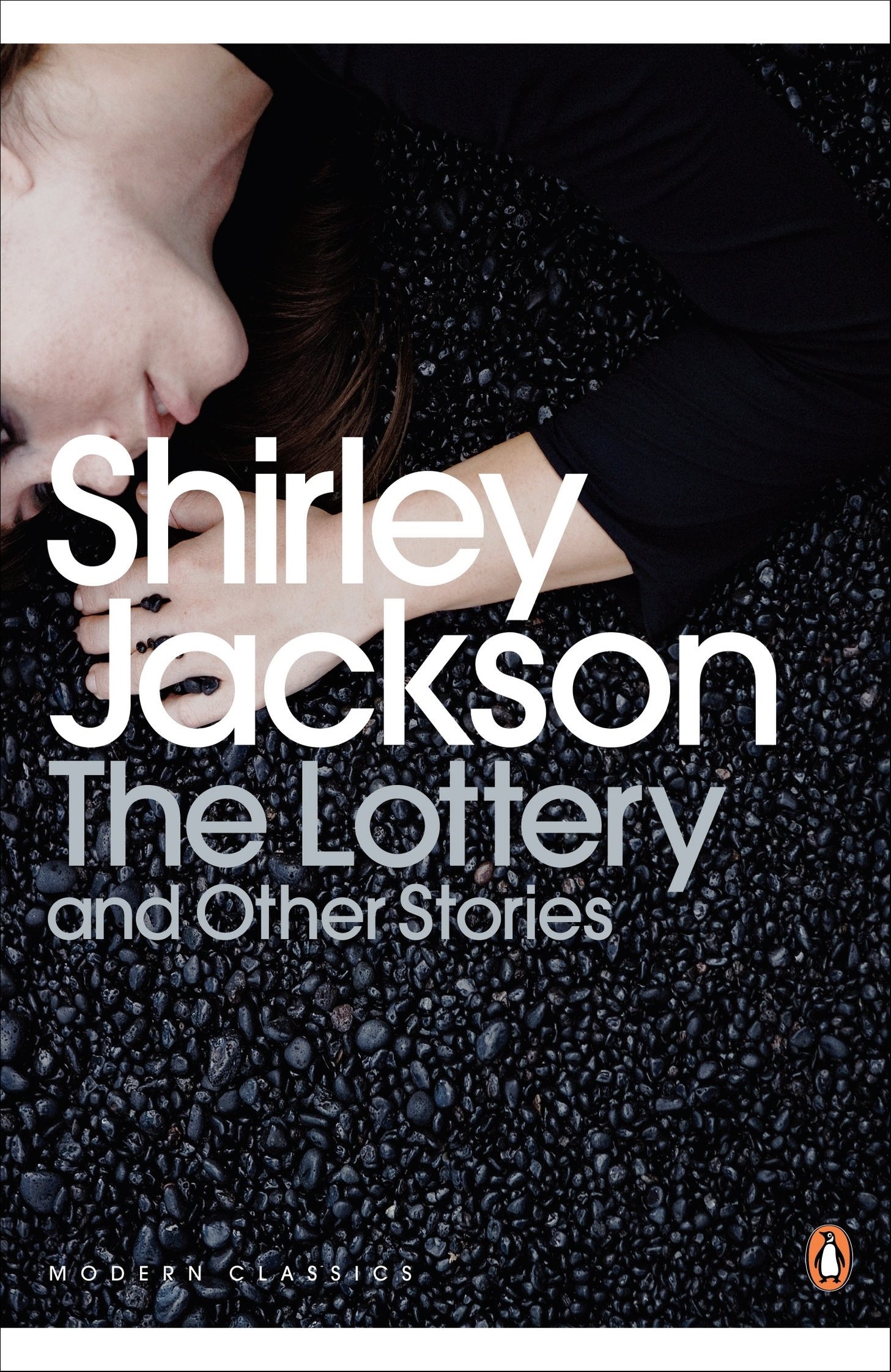
The Lottery and Other Stories (or, as my edition is titled, The Lottery, or The Adventures of James Harris) is a short story collection by Shirley Jackson.
Finished on: 11.1.2026
Content Note: (critical and historical use of) racial slurs, (critical treatment of) racism, misogyny
The Lottery and Other Stories is a strong collection. The stories vary in length from a couple of pages to long-ish 25 pages or so, and they felt very distinct, though notably a common thread runs through most of them: Jackson masterfully finds the violence, coldness and harshness that lurks beneath the surface of the (upper) middle class, often to very chilling effect. Her writing shows a sense of humor, but mostly she brings her characters – mostly women, often young – to the brinks that hide in polite society, and threatens to push them over.
Underscoring the sinister tones are quotes from Saducismus Triumphatus, a 17th century book on witchcraft, and The Daemon Lover, a folk ballad about the devil convinving a woman to run away with him. My collection also included Biography of a Story, Jackson’s own recollections of the first reception of The Lottery and the hate mail she received for it.
Read more about each of the stories below.
The Intoxicated
A drunk guest heads to the kitchen during a party to find the host’s daughter there. The ensuing conversation leaves him unsettled.
This story is on the shorter side and yet quickly captures the way teenagers often feel threatening to adults, with their new-fangled ideas and their clear perspective on the cracks in current society. A really good start.
The Daemon Lover
A not quite young woman is waiting for her fiancé Jamie. They are supposed to get married, but he appears to be running late.
The Daemon Lover quickly goes from quiet hopefulness, tinged with anxiety, to straight up inexplicable horror, from nervous cleaning to existential dread. It left me breathless.
David loves his apartment, and tonight he is looking forward to hosting his neighbor Marcia. But the night takes a very unexpected turn.
Like Mother Used to Make has one of the warmest starts to a short story ever. The way David’s relationship with his apartment is described is some of the sweetest stuff ever. Of course, things don’t remain that way as David is too polite to stand up for himself.
Trial by Combat
Emily Johnson rents a room, but things keep disappearing from it. She suspects her neighbor Mrs. Allen. But how to confront her?
Trial by Combat somewhat continues the theme of being too polite, but in this case, Emily at least tries to put up a fight. But when your adversary doesn’t stick to the rules of politeness, it just doesn’t work. This story feels extremely topical when I think about the way the far right is completely destroying journalism by simply lying, even in the face of evidence, and journalism – adhering to the rules – just can’t cope with that.
The Villager
Miss Clarence comes to have a look at furniture for sale but Mrs Roberts had to run out, leaving her the run of the house, and Miss Clarence briefly steps into a different life.
The Villager is one of the less sinister stories in the collection, I thought. Although there is a feeling of a crossing of boundaries, the transgression feels so little and so playful with no harm done that it was pretty enjoyable.
My Life with R. H. Macy
A young woman starts working at the department store Macy’s.
This story feels like Jackson is channeling Kafka, but in a somewhat feminine way, if that makes sense. It is one of the stranger stories, less grounded in reality, though not completely removed from it.
The Witch
A mother, her boy and her baby are riding on a train, when another passenger strikes up a conversation with the boy.
The Witch is a chilling take on how boy and men with bond over their violence against women and girls, and how a mother has little possibilities to avoid it. Also, the passenger is just pure creepy.
The Renegade
After the kids are off to school, Mrs Walpole gets a call from a neighbor that her dog has been killing their chickens, and that she needs to take care of it.
As somebody who owns a dog, this story was particularly horrible for me. Nothing bad happens to the dog (yet), but the easy way pretty much everybody around Mrs Walpole seems to relish the opportunity to hurt another living creature, even her own children who are supposed to love the dog, is gut-wrenching. It shows just how thin the veneer of the suburbs is over the cold violence that is an inextricable part of it, it appears.
After You, My Dear Alphonse
Johnny brings his friend Boyd home to his mother, Mrs Wilson. And Mrs Wilson tries her best to give him a warm welcome.
After You, My Dear Alphonse was one of the funnier stories, but less “haha funny”, more like “this is so uncomfortable, nervous laugh” funny. Mrs Wilson sees that Boyd is Black and immediately makes assumptions about him, assumptions she can’t let go off, despite him correcting her pretty immediately. It’s a short, effective evisceration of the kind of “well-meaning” racism white people who think of themselves as progressive often show.
After Laurie starts kindergarten, his mother notices that his behavior changes quite drastically. And he keeps telling stories about Charles and how he misbehaves in kindergarten.
With this story, I saw the “twist” coming pretty soon, but it was still a pretty fun read, though, to me, one of the lesser stories in the collection.
Afternoon in Linen
Mrs Kator and her son Howard are visiting Mrs Lennon and her granddaughter Harriet. Mrs Lennon wants to show off Harriet’s skills, but Harriet is not willing to participate.
As someone who works with children, this story had me cringing in my seat. It’s basically a manual for how not to do it, and I was with Harriet all the way, never mind whether she actually pretended to write poetry or not.
Flower Garden
When the younger Mrs Winnings hears that somebody has finally moved into the cottage just down the road, the cottage she always dreamed of, she is ready to strike up a friendship with the new inhabitant, Mrs MacLane and her son. But things turn sour when Mrs MacLane hires a Black gardener.
Flower Garden takes the clear understanding of racial dynamics and raicsm that Jackson showed in After You, My Dear Alphonse, and removes any and all benevolence. It examines how white people are punished if they don’t participate in racism, and how white people enforce racism even if they don’t necessarily “mean it like that”.
Dorothy and My Grandmother and the Sailors
Every year, the girl and her best friend Dorothy go to San Francisco together with her family to buy matching coats and look at the fleet that is arriving in the harbor, despite ubiquitous warnings about sailors.
This story takes a probably justified worry – sailors are not necessarily the best company for young girls – and blows it so much out of proportion that it becomes almost traumatic for the girls to see a sailor. But it also captures an undercurrent of pleasure that runs through that fear, as if it was fun for the girls, especially Dorothy, to be so afraid.
Colloquy
Mrs Arnold goes to a doctor.
Colloquy is only two pages, and yet a rather succinct commentary on the inadequacy of doctors sometimes, and also of failing to express something difficult to capture.
Elizabeth
Elizabeth Style is a literary agent at a small, struggling company that she runs together with her lover Robert Shax. When Robert hires a new assistant without telling her, Elizabeth has her way of dealing with that.
Elizabeth is one of the longer stories and has some of the best writing in the collection, I thought. Nothing much happens as the story is more interested in portraying Elizabeth, a not very sympathetic character. Jackson has a way of describing her so that we are able to see the disappointment and hurt that caused most of the cruelty and bitterness. Ultimately, I didn’t really like Elizabeth but I hated her way less than I thought I would.
A Fine Old Firm
Mrs Friedman comes over to introduce herself to Mrs Concord and her mother as their sons Bob and Charles are in the army together.
This story felt almost kind and light-hearted which makes me almost suspicious of it, given the nature of the collection otherwise. But while there is certainly a comment in here about the way networking works and how the women in the men’s life are very much involved in that networking effort, I just took it mostly as a nice moment of interpersonal connection.
The Dummy
Mrs Wilkins and Mrs Straw are going out to dinner together. The dinner entertainment includes a ventriloquist, but not a very nice one.
The Dummy is pretty funny, surprisingly so, given that the ventriloquist uses his dummy to bully his girlfriend in the worst way.
Seven Types of Ambiguity
Mr Harris has an antique bookstore. When a couple comes in with a big order, one of Harris’ regular customers helps them out and kindles their interest in a special book.
Seven Types of Ambiguity gets this close to being an uplifting, almost romantic story. I firmly expected a warm, happy ending (despite most of the other stories in the collection), but at practically the last second, Jackson pulls the rug out from under us as egocentrism wins over altruism.
Come Dance with Me in Ireland
When a poor salesman rings Mrs Archer’s bell and then collapses, Mrs Archer and her friends Kathy and Mrs Corn decide that they must help him.
This story somewhat echoes After You, My Dear Alphonse in showing the condescension that often comes with offers of help. Only in this story, the person they want to help isn’t quite as sympathetic, disrupting the dynamic of helper-helped completely.
Of Course
Mrs Tylor quickly starts to regret her offer to help her new neighbor Mrs Harris with moving in.
Okay, we have probably all been in the situation where we made an offer we later regretted. In this case, Mrs Tylor thinks she know Mrs Harris because she bears all of the marks of being “one of the good people” aka “one of us”. But when it turns out that Mrs Harris doesn’t really belong to this group, well, no more help is given. In the decisive and quick way, Mrs Tylor turns from her, it reminded me a little of Flower Garden, although I thought Mrs Tylor’s reaction was a lot more understandable than racism.
Pillar of Salt
Margaret and Brad are looking forward to a holiday without the children in New York. But Margaret quickly finds herself deeply uncomfortable.
Pillar of Salt is another story where the uncanny and the horrible suddenly creep into the mundane. Or maybe they have been there all along, hidden behind formalities and politeness. It didn’t work that well for me, though, as other stories here did.
Men with Their Big Shoes
Mrs Hart is a young mother, and she is glad to have Mrs Anderson to help her with the house, even if Mrs Anderson isn’t the easiest to be around. But Mrs Anderson has plans of her own.
Men with Their Big Shoes brings Mrs Hart into an impossible position and then leaves her there, unable to stand up for herself, caught between appearances, reputation and politeness in the most uncomfortable way.
The Tooth
Mrs Spencer needs to go to the city to get her tooth removed. Taking the night bus on a mix of painkillers, sleeping pills and alcohol, another passenger starts talking to her in strange ways.
The Tooth is basically a story about a drug trip, with a mix of nightmare and dreams that is quietly unsettling, putting it at odds with the usual drug-fueled shenanigans these kind of stories usually bring (when written by men).
Got a Letter from Jimmy
He received a letter from Jimmy but wants to send it back unopened. She desperately wants him to read it.
This is another two-pager that doesn’t give us much information about the characters at all, other than the husband and wife seemingly locked in a kind of fight or power struggle we never really understand. But the violent force of this fight, at least on the wife’s part, is made very transparent.
Every year on June 27, the town gathers for The Lottery that is to ensure the town’s prosperity for another year.
The Lottery is probably Jackson’s most famous story, and quite understandably so. The cool way with which the barbarity of the ritual is conducted makes explicit what runs through pretty much all the other stories in this collection as an undercurrent. It gave me goosebumps for sure, especially because there are so many things people do for tradition’s sake (or supposedly for prosperity’s sake) that are basically as cruel, sanitized through bureaucracy, the story still feels pretty realistic.
[Sidenote: if you read the story, you should also read this fanfic interview that coincidentally made the rounds a few days after I finished the story. It is great, but also full of spoilers.]
Biography of a Story
In this text, Jackson writes about writing The Lottery and the reception it received after its first publication, extensively quoting from the hate mail she received that shows that people – even the supposedly highly educated people that read The New Yorker – really didn’t understand the story in the slightest. I can only imagine what kind of mail (and tweets etc) Jackson would get if she published The Lottery today. Pretty sure it wouldn’t be better in the slightest.
Summarizing: a great collection. You should read it.
 kalafudra's Stuff