White Snail
Director: Elsa Kremser, Levin Peter
Writer: Elsa Kremser, Levin Peter
Cast: Marya Imbro, Mikhail Senkov, Olga Reptukh, Andrei Sauchanka, Nina Drako
Seen on: 4.2.2026
Content Note: (attempted) suicide
Plot:
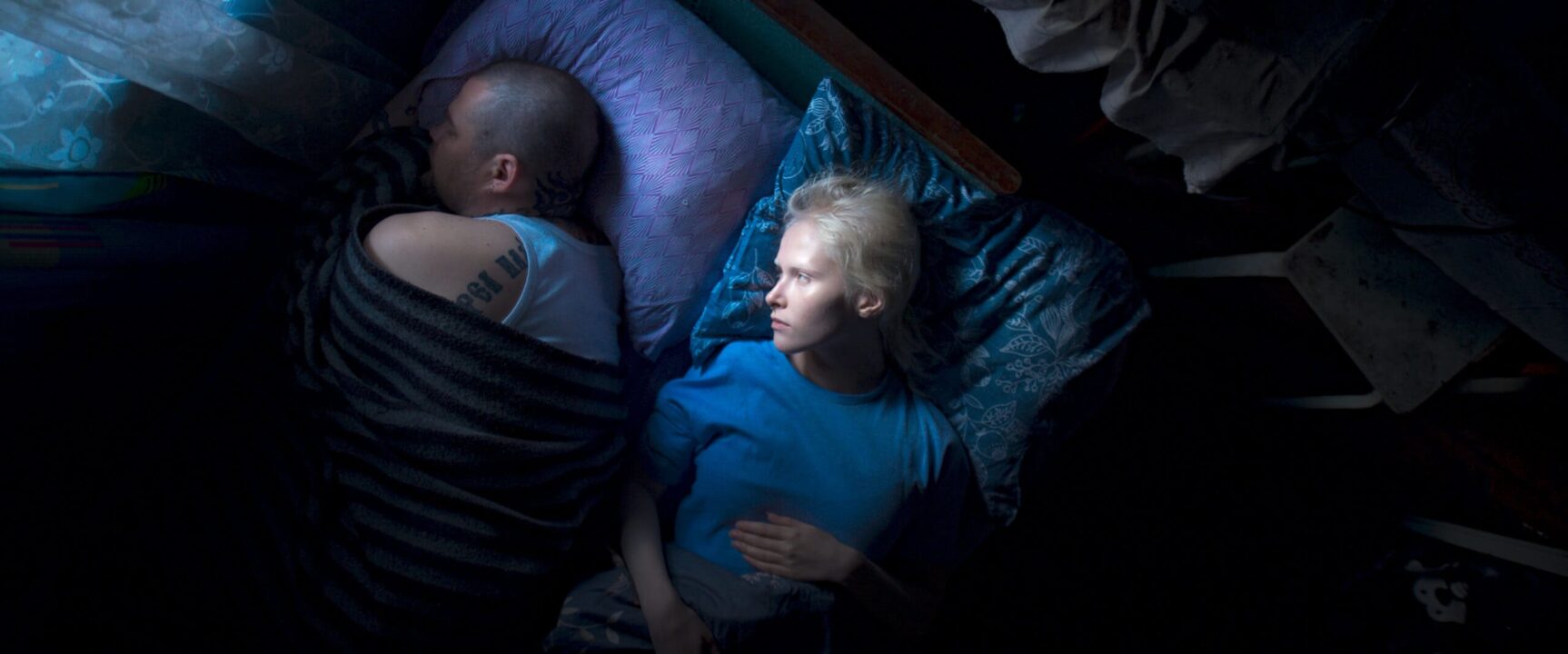
Masha (Marya Imbro) is at model school and dreams of getting a big contract in China. That is, when she isn’t thinking about death instead. After a suicide attempt, she is in hospital. The person she shares the room with there dies, prompting Masha to think more about the physical side of dying. Her investigation leads her to the morgue where she meets pathologist Misha (Mikhail Senkov). Slowly and almost despite themselves, the two connect in their loneliness.
White Snail is a slow-moving film that lives off the details it captures with great sensitivity. The story it tells is not revolutionary, but thanks to good character work, it doesn’t really matter.

Kremser and Peter hail from documentaries (I saw and loved their debut, Space Dogs) and there is a documentarian touch about White Snail. There doesn’t seem to be much setting in scene, more capturing things that unfold. From what I gather, their cast pretty much play version of themselves, which certainly underscores this impression. I hadn’t really read up on the film beforehand, but I had my first suspicions when we see Misha painting – the way Senkov holds the brush feels entirely natural to him – and it should. It is, in fact, his art that we see in the film. (That Masha is an abbreviation of Marya and Misha of Mikhail was another clue, of course.) It’s no easy task for actors to accomplish, but Imbro and Senkov do great.
I thought that the story of the beautiful, but somewhat sad or unhappy model is not particularly new. But this is not the glossy version of modeling that Hollywood likes to show us. Masha hopes to get a contract in China, where white models have it somewhat easier. She worries about her visa options. She goes to modeling school and painstakingly protects her skin from even the hint of melanin. Her loneliness is palpable. Her mother’s reaction to her suicide attempt is to bring her to an exorcist. Suddenly, it doesn’t seem like a contradiction that Masha might be beautiful and sad (and why should it? It is the Hollywood fantasy after all that beauty makes happy).

To me, though, it was Misha who was more fascinating. He is eccentric, a loner who sometimes appears lonely, but there is also a deep sense of contentment about him, a warmth that seems surprising. He is completely himself and that is both what draws Masha to him, and why she also tries to provoke him, to test him. I read a couple of times that their relationship is understood in a romantic way, but I didn’t see that part. To me, it was all about platonic intimacy.
I was completely caught up in the film, that’s for sure. It is atmospheric and true to its characters at all times. A lovely combination that makes me look forward to whatever Kremser and Peter do next, be it fiction or documentary.
Summarizing: excellent.
 kalafudra's Stuff