Ulrich Seidl und die bösen Buben [literally: Ulrich Seidl and the Bad Boys]
Director: Constantin Wulff
Plot:
Constantin Wulff followed Ulrich Seidl while he worked on his documentary Im Keller [In the Basement] and on the play Böse Buben / Fiese Männer [Bad Boys / Hideous Men], taking a look at how Seidl works: how he creates both documentary and fiction from fictional and real elements. How he examines masculinity (mostly) through both lenses. How he enriches both projects with elements from the other.
The documentary was a fascinating look at the work processes of Ulrich Seidl (equally illuminating was the discussion Wulff and Seidl had after the film at the cinema I saw this at) and the parallels he creates between both the play and his own film.
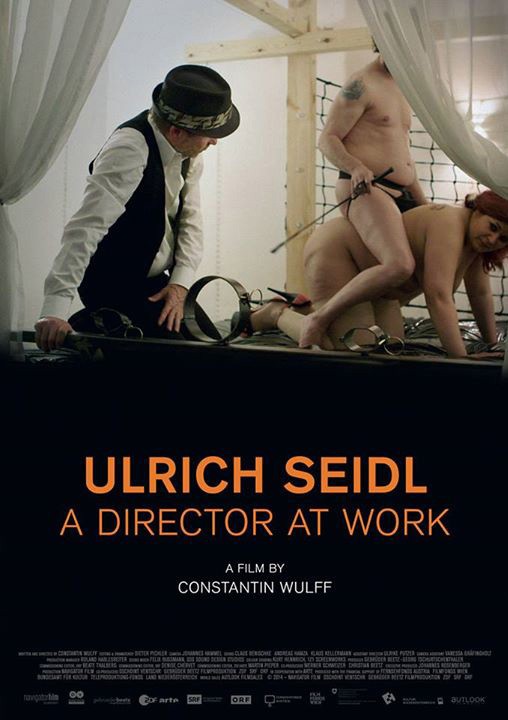
If you aren’t Austrian, chances are you did not hear about the uproar Seidl’s recently released Im Keller caused. One, there was the fact that he “caught” politicians partying in a basement full of Nazi paraphernalia. But two, his entire method of filming documentaries were called into question (which was probably the politicians’ way of trying to save their own skin). It was criticized that he would set things in scene, that everything was fictionalized and bent to Seidl’s vision. In that almost-shitstorm it was rather lucky that Wulff had actually followed Seidl during the shoot (even though his original plan was only to follow the stage work) and thus could give a more direct look at and a platform to Seidl himself, even though the documentary is not about how far Seidl fictionalizes or doesn’t fictionalize.
Personally I think that the discussion surrounding Seidl’s work in general and in particular the talk Seidl and Wulff had after the showing of the film was fascinating. I find it surprising that people actually believe that documentaries are neutral and that Seidl – by openly staging his docs – somehow only pretends at reality. Subjective staging starts in any documentary with the placement of camera and ends with the editing of the material. There is no objective portrayal of reality. Yes, Seidl probably blends documentary more with fiction than we are used to in the genre. But, as he put it, these enhancements still carry truth. They might overemphasize a certain trait in a person or a certain momentum in a situation, but the original trait/momentum is still there.
 But back to the film – it’s so easy to get caught up in the discussion, despite the fact that the film wasn’t actually about that. Instead the film showed beautifully how Seidl drew from his experiences in the basements (which he was already shooting at the same time as the rehearsals for the play that was shown two years ago) and translated them to his stage work (and vice versa) and how it all becomes an examination of manliness and how masculinity is created, performed and kept – both in the play and in the film.
When I saw the play two years ago, I was taken aback by some of the things in it, especially René Rupnik’s part, but also Nabli Saleh’s part. By now I know that they didn’t really play a part but rather played themselves and I think it’s generally a little clearer now for me what Seidl was getting at with both of them. (Though I still don’t share his apparent admiration or fascination for either.) It would be interesting to see the play again now, also having seen In the Basement and to find out whether that new understanding holds up and makes me rediscover both.
In any case Wulff’s documentary invites us to look more closely at Seidl and his work – which is certainly something that pays off.
 Summarizing: An insightful portrait.
 kalafudra's Stuff
[…] a discussion that filmmakers also face today (eg Ulrich Seidl). But I’m a child of poststructuralism. If you accept that you can’t represent […]