The Cut
Director: Fatih Akin
Writer: Fatih Akin, Mardik Martin
Cast: Tahar Rahim, Simon Abkarian, Makram Khoury, Hindi Zahra, Kevork Malikyan, Bartu Küçükçaglayan, Trine Dyrholm, Moritz Bleibtreu (in a mini-cameo)
Seen on: 15.01.2015
Plot:
Nazaret (Tahar Rahim) is an Armenian in the Ottoman Empire at the beginning of the 20th century. That is not the best place to be an Armenian and as the political situation results in the Armenian Genocide, Nazaret is separated from his family and forced into slavery in the desert, building roads. Against all odds, he survives the ordeal, though he does lose the ability to speak due to getting stabbed in the throat. When the situation allows it, he sets off to find his family again, a search that leads him across the world.
The Armenian Genocide is certainly something that we know very little about in Europe and so films like The Cut are important to give an introduction to the subject. But unfortunately, other than that it didn’t work for me at all.

The film’s biggest problem is that it’s just so damn long. Of course, you could say that that mirrors the length of Nazaret’s search for his family, but the problem with that is that I so badly wanted the film to be over, that I didn’t care anymore whether the search was successful or whether Nazaret just died in a ditch somewhere as long as the film finally ended.
It was also a weird choice that when people were supposed to talk Armenian with each other, they actually spoke English – with an accent, of course. That’s probably due to the fact that the director is German-Turkish and probably doesn’t speak Armenian, and neither does Tahar Rahim. But it is nevertheless grating. The biggest advantage of Nazaret losing his voice is that it reduces the use of English at least a little. The downside is that it leaves a character who is propelled by one emotion and one quest with an even further limited range of expression possibilities. With few exceptions, Rahim has one facial expression for the entire film: that of dogged persistence. And even though his quest takes him 10 years of very hard living, the only outward sign of ageing are a few grey hairs.
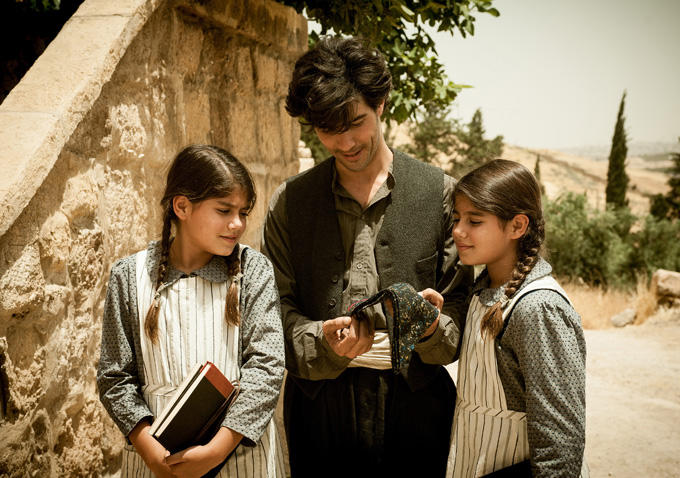
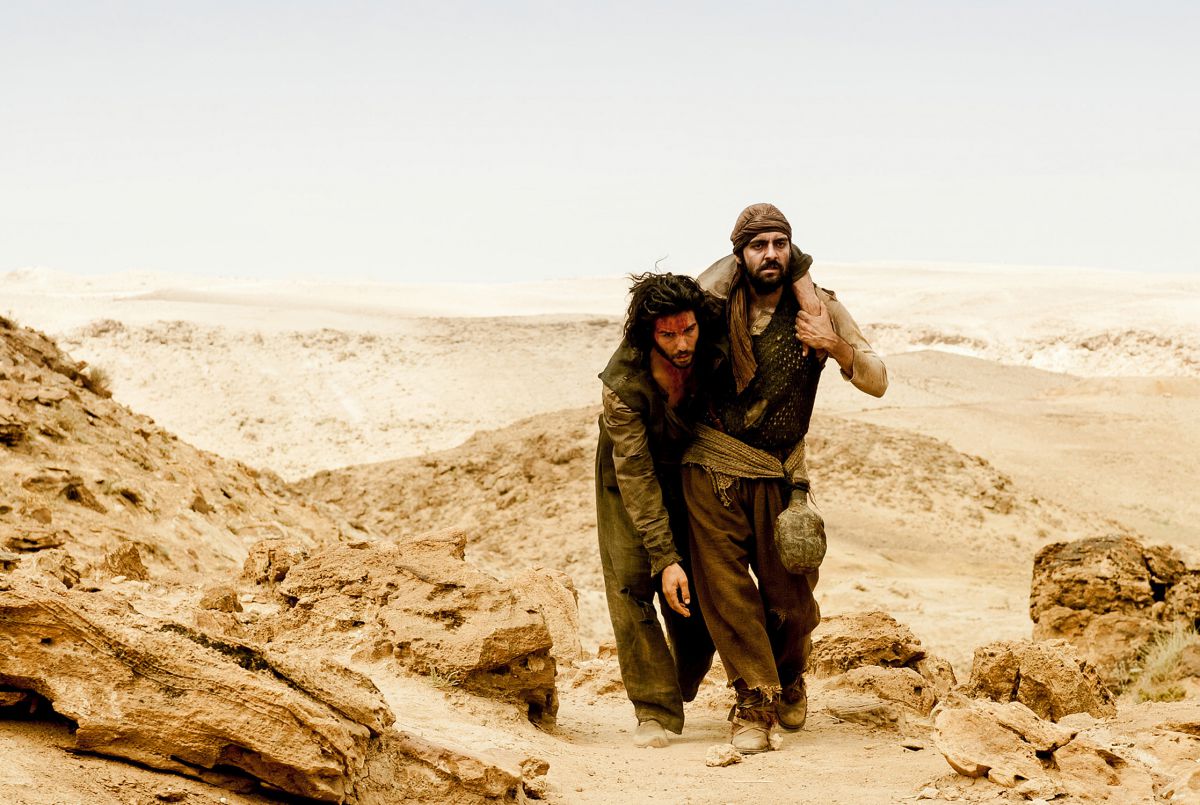 There are other issues I had with the film. When it paints Nazaret’s family life before his forced “conscription” as perfectly idyllic and all Armenians generally as most wonderful and flawless, you start wondering whether they are actual humans. The few women in the film are either plot-points or macguffins, but not people. Plus, most of them are constantly under threat of rape or actually raped – and what’s importatnt about that is Nazaret’s reaction to it. How Nazaret comes from point to point in his quest is unlikely, to say the least.
There are good things about the film. The cinematography is wonderful, and Tahar Rahim gives a good performance, despite the (unnecessary) constraints on it. But altogether an important historical story is lost in the mess of the film.
 Summarizing: Eh. Probably better to read a book about the genocide.
 kalafudra's Stuff