Love’s Labour’s Won aka Much Ado About Nothing
Director: Christopher Luscombe
Writer: William Shakespeare
“Sequel” to: Love’s Labour’s Lost
Cast: Edward Bennett, Michelle Terry, Sam Alexander, William Belchambers, Tunji Kasim, Leah Whitaker, Frances McNamee, Flora Spencer-Longhurst, John Hodgkinson, Peter McGovern, Nick Haverson, Emma Manton, Chris McCalphy, David Horovitch, Jamie Newall, Thomas Wheatley, Roderick Smith
Seen on: 04.03.2015
Plot:
Benedick (Edward Bennett) and Claudio (Tunji Kasim) with their superior Don Pedro (John Hodgkinson) just returned from the war. They come to Leonato’s (David Horowitch) where they wish to stay for a while. Claudio immediately falls in love again with Leonato’s daughter Hero (Flora Spencer-Longhurst) while Benedick and Leonato’s niece Beatrice (Michelle Terry) fight as much as they’re able to. Pedro wants to see everybody end up together, while Pedro’s half-brother John (Sam Alexander) does his best to sabotage everything.
I really enjoyed Love’s Labour’s Won. Luscombe proved once again his sense for the comedic, the cast is great and everything fits perfectly together.
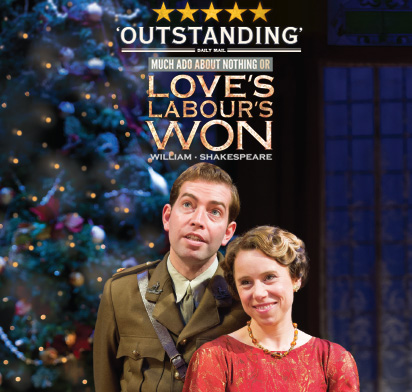
Luscombe conceptualized Much Ado About Nothing as a squel to Love’s Labour’s Lost (hence the title) where Berowne and Rosaline meet again in the form of Benedick and Beatrice. And I have to say I really love that interpretation of the two characters: not two people who, never having met before, take an instant dislike to each other. Rather it’s two people who used to be in love, but the world has disappointed them, making their love impossible – and the ensuing bitterness makes them mean to each other. It makes their quick change of sentiment when it’s only hinted at the the other might be in love with them much more believable.
The ending and how everything is set to right again is still one of the weakest things Shakespeare has ever written, at least when it comes to Hero and Claudio. It really isn’t easily stomached, even when everything else works perfectly, as is the case here.
 But since the ending really is the only squabble I have with the play and this production (and let’s face it, I was aware of what was coming), that’s not much of a problem at all. Instead I reveled in Luscombe’s sense of humor and for comedic timing, especially with Nick Haverson, who already proved himself in Love’s Labour’s Lost, and Edward Bennett’s perfect facial expressions, as well as the nice music and general setting.
There was a lot to enjoy and time just flew by (and I kept thinking of my last experience with Much Ado About Nothing and how much it sucked compared to this one). I’d watch it again in a heartbeat.
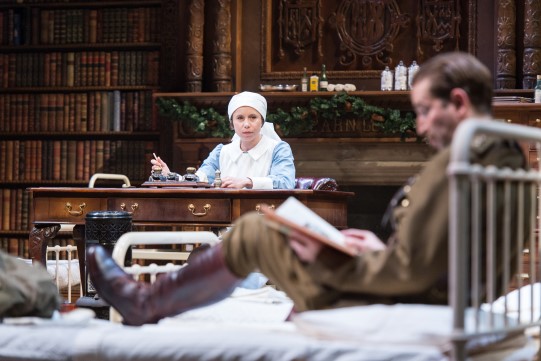 Summarizing: Great.
 kalafudra's Stuff