Poltergeist III
Director: Gary Sherman
Writer: Gary Sherman, Brian Taggert, Steve Feke
Sequel to: Poltergeist, Poltergeist II: The Other Side
Cast: Heather O’Rourke, Tom Skerritt, Nancy Allen, Zelda Rubinstein, Lara Flynn Boyle, Kipley Wentz, Richard Fire, Nathan Davis
Seen on: 2.6.2015
Plot:
Carol Anne Freeling (Heather O’Rourke) is sent to stay with her aunt Pat (Nancy Allen), her husband Bruce (Tom Skerritt) and their daughter Donna (Lara Flynn Boyle) in the city, in a new skyscraper Bruce is currently overseeing the finishing touches on. But Reverend Kane (Nathan Davis) has followed Carol Anne even there. The strange phenomena surrouding Carol Anne are chalked up to psychosis by her school psychologist (Richard Fire) – and in the meantime, Kane grows ever nearer.
The second Poltergeist film already couldn’t hold a candle to the first, but the third is a big step down from even that. Nothing about it worked for me.

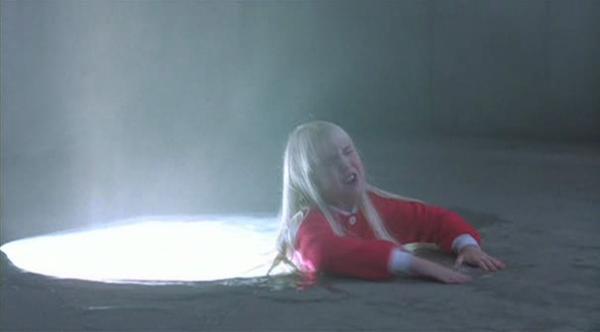
Since for me the most constant excellent thing about the movies where the Freelings, the movie had a very bad standing to begin with as all that remains of them is Carol Anne, who on the outside appears to have barely aged at all despite the 6 years between the films – quite remarkable for a child. Unfortunately this outward lack of change is quite at odds with the change in character and performance – Carol Anne may still look like she was 8 years old, but she acts way too wise and mature for that age, giving her character a precociousness that rings fake.
I was also a little unhappy with the skyscraper/apartment-setting. I was unhappy with all those teenagers running around that were included for no good reason – but horror movies need teenagers or something. I don’t know. And I was unhappy with Kane – he already didn’t scare me in the second film, but admittedly Julian Beck gave off a creepy vibe when he played him then, a vibe that Nathan Davis just can’t match.

And I was even unhappier with their take on science and the supernatural, casting both of them as opposing forces in Carol Anne’s psychologist’s refusal to see the truth – and really having nothing good to say about science at all. After the lovely together of these two things in the first film, this was a bit of a slap in the face.
I got bored quickly during the film and I felt my attention drifting off more than once. Since the plot was a mess you could both say that this made it even harder to follow and that it didn’t matter much anyway. Nothing about this film matters much.
 Summarizing: You can ignore this one exists even more safely than you can ignore the second film.
 kalafudra's Stuff