Dylda
Director: Kantemir Balagov
Writer: Kantemir Balagov, Aleksandr Terekhov
Cast: Viktoria Miroshnichenko, Vasilisa Perelygina, Andrey Bykov, Igor Shirokov, Konstantin Balakirev, Kseniya Kutepova, Alyona Kuchkova, Timofey Glazkov
Part of: Viennale
Seen on: 26.10.2019
Content Note: ableism
Plot:
Iya (Viktoria Miroshnichenko), called Dylda – Beanpole – by everyone, is a nurse at the tail end of the second World War that left Leningrad pretty much devastated. When she isn’t working, she takes care of her little boy Pashka (Timofey Glazkov). Things aren’t easy for the two of them and made harder by the fact that Iya has episodes – stupors – a remnant of the work she did at the front. But they make do, at least for a while, especially with the help of the doctor Iya works with, Nikolay (Andrey Bykov). When Iya’s best friend Masha (Vasilisa Perelygina) who was a soldier returns, things have changed though and both have to figure out what to do now.
Dylda is a strong film that echoed with me long after it was over. It tackles some very tough topics with sensitivity, but not by pulling its punches. I’m not so sure about how it handles disability – there was a bit much going on here. But other than that, I was really impressed.
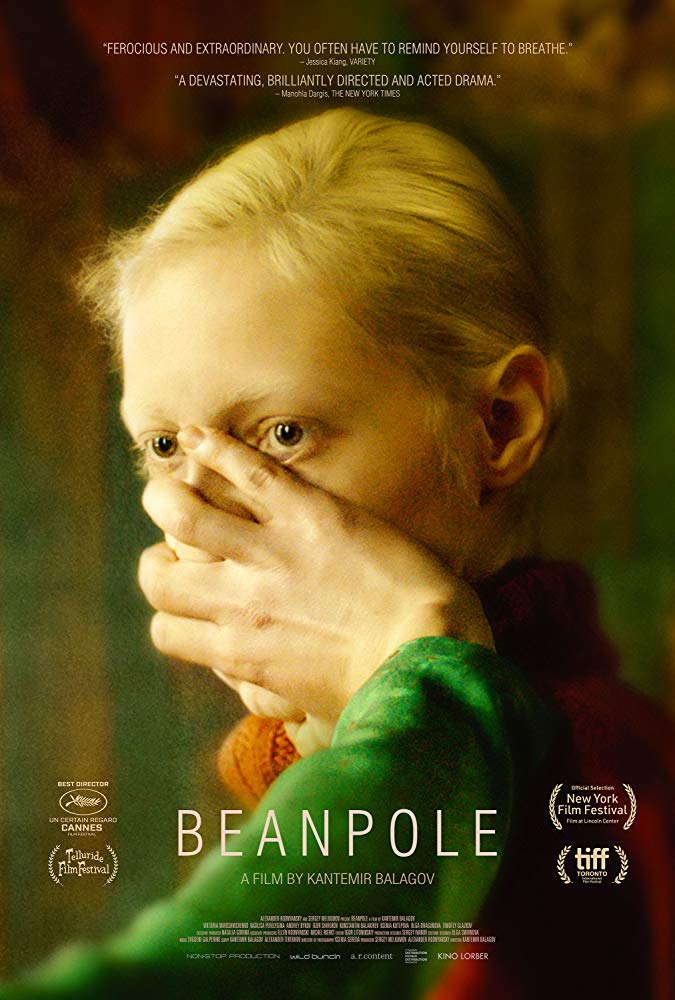
Dylda is mostly about how devastating war is – even far away from the frontline and the actual fighting, what we see here are far-reaching consequences that vibrate through the entire society. Poverty, suffering, desperation are driving forces here that bring out the worst in people. But at the same time, the film is also about how much humanity still remains, despite all those things. Masha is a case in point for the former: her actions are hard and cruel, but we can see all the hurt that pushes her, the lack of options that she has. And Iya is a case in point for the latter: Her softness and open vulnerability belie a tough core that can make hard choices.
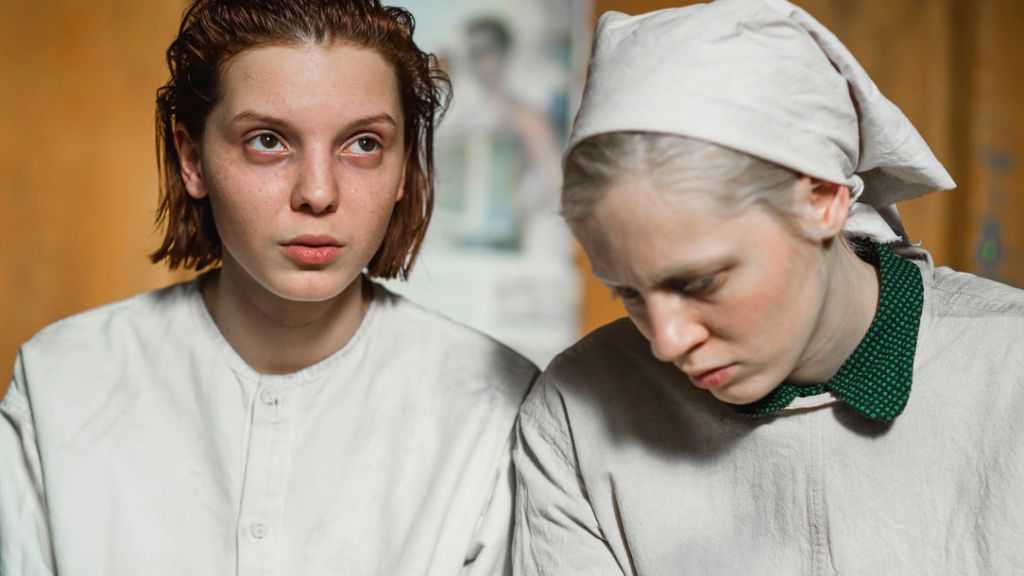
Miroshnichenko and Perelygina are both acting newcomers, but you wouldn’t guess from their performances here, bringing their complex characters and their even more complex relationship to life with utter realism and relentless emotionality.
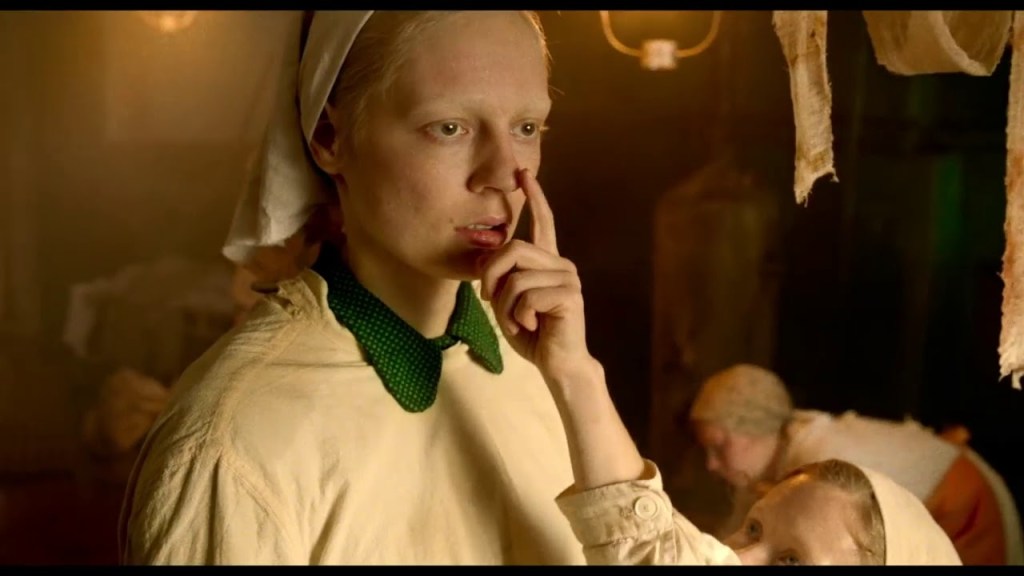
Disability is a huge topic in the film – not only with Iya’s condition, but also with the many severely injured soldiers she works with. And here is where I was less smitten with the film’s take. [SPOILERS] During one of her episodes, Iya crushes Pashka and kills him. It’s a harrowing scene for sure and not unrealistic, but it feeds into the narrative that disabled people can’t take care of children or cannot be trusted with them – and that is very problematic. Plus, it is revealed that Iya and Nikolay have been helping disabled soldiers comit suicide, reinforcing the notion that disabled people are only a burden. [/SPOILERS] I wish the film had been leaning less on ableist narratives.
Other than that, though, it is an excellently crafted film. The cinematography is fantastic, the way they work with colors, too. There are many long takes in the film, giving it a slow pace, but it doesn’t feel long or boring because there is so much happening emotionally. It’s a tough film – and one that definitely stayed with me.
Summarizing: Really good.
 kalafudra's Stuff