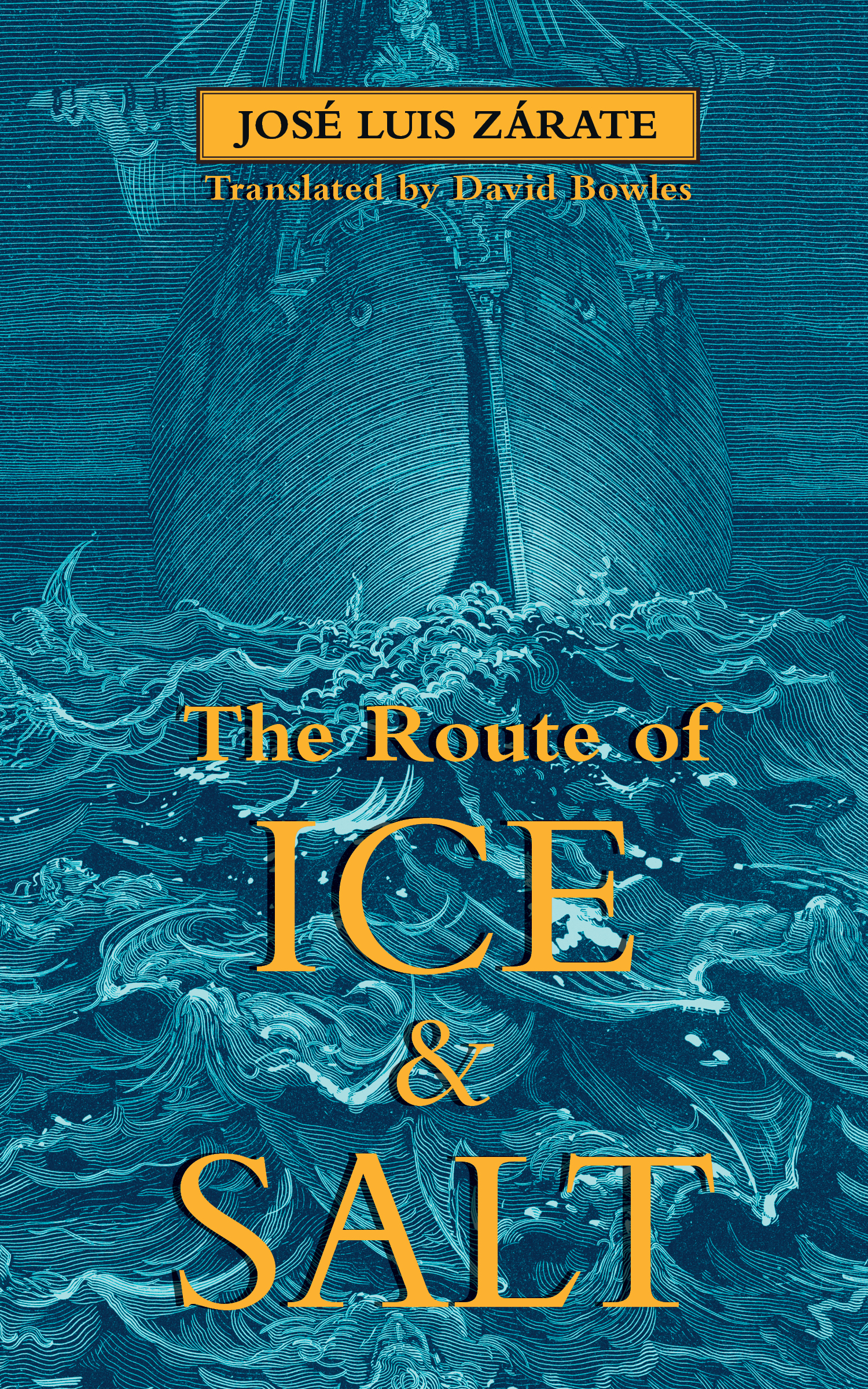
The Route of Ice and Salt (original: La Ruta del Hielo y la Sal) is a novella by José Luis Zárate, based on Bram Stoker’s Dracula. I read the English translation by David Bowles.
Finished on: 15.11.2023
Content Note: antiziganism, (critical treatment of) homomisia
Plot:
The Demeter is set to sail from Varna to Whitby with 50 boxes of Transylvanian soil. While not the most usual cargo, it also isn’t that out of the ordinary to transport and the captain and his crew are set for a long, but mostly boring journey. But strange things are happening aboard the ship, making it like nothing they ever experienced before.
A queer retelling of (part of) Dracula from a new perspective sounded like exactly my cup of tea. But unfortunately, I couldn’t really get into The Route of Ice and Salt despite its many strengths. It is an excellent piece of literature, it is just not my style.
The Route of Ice and Salt has one mission, and that is to examine the long-standing relationship between queer desire and monstrosity. In the horror genre, and even outside of it, queer-coded villains are well established, and there are many ways that works of fiction and societal perceptions have drawn parallels between literal monsters and queer people and their desires.
This novella starts just there: the captain is gay, and thanks to internalized homomisia, he sees himself as a threat to his entire crew. To be fair, he actually is, too. We learn that he chooses his crew at least partly on looks, and he is almost constantly obsessing over them. While that plays into old fears that straight people have about queer people, it is not outright harmful, just super uncomfortable as a reader. But there is a scene where he literally grabs one of his crew and sucks on his neck, a man he doesn’t even share a language with, and that is sexualized assault, plain and simple and maybe the novella’s biggest misstep.
But fortunately, the narrative doesn’t stop there. As it progresses and we see Dracula’s actual monstrosity contrasted with the captain’s attempts to navigate his desires in a world that doesn’t have any space for them, the difference between the two of them become more and more obvious. In the end, it is probably one of the most in-depth literary analyses of this conflagation out there.
Zárate does so in a very lurid style (Bowles cannot have had an easy job with the translation here). There are some beautifully poetic phrases, but for me it was the kind of prose that made me stop paying attention to the words and rather swept me off into a fever dream of an atmosphere. Honestly, it was not the kind of reading experience I enjoy, and I think that is why the novella as a whole didn’t work that well for me. But that doesn’t mean it couldn’t work for you – and it is definitely worth giving it a try.
Summarizing: well done, but not my personal thing.
 kalafudra's Stuff