El niño pez
Director: Lucía Puenzo
Writer: Lucía Puenzo
Based on: her own book
Cast: Inés Efron, Mariela Vitale, Pep Munné, Diego Velázquez, Carlos Bardem, Arnaldo André
Seen on: 13.7.2024
Content Note: sexualized violence/rape, queermisia, infanticide
Plot:
Lala (Inés Efron) and Ailin (Mariela Vitale) are in love, but things are complicated. Not only because Ailin is Lala’s Guayi, her housekeeper, having come from Paraguay to Argentina. And queer relationships are frowned up anyway. Nevertheless, they hatch a plan to run away together by stealing from Lala’s family. But that plan goes very wrong.
The Fish Child covers some very dark topics, but by centering the love between Lala and Ailin, it doesn’t feel quite as dark as it is, highlighting instead the hope their closeness despite everything brings to all of that darkness. It is a lovely film.
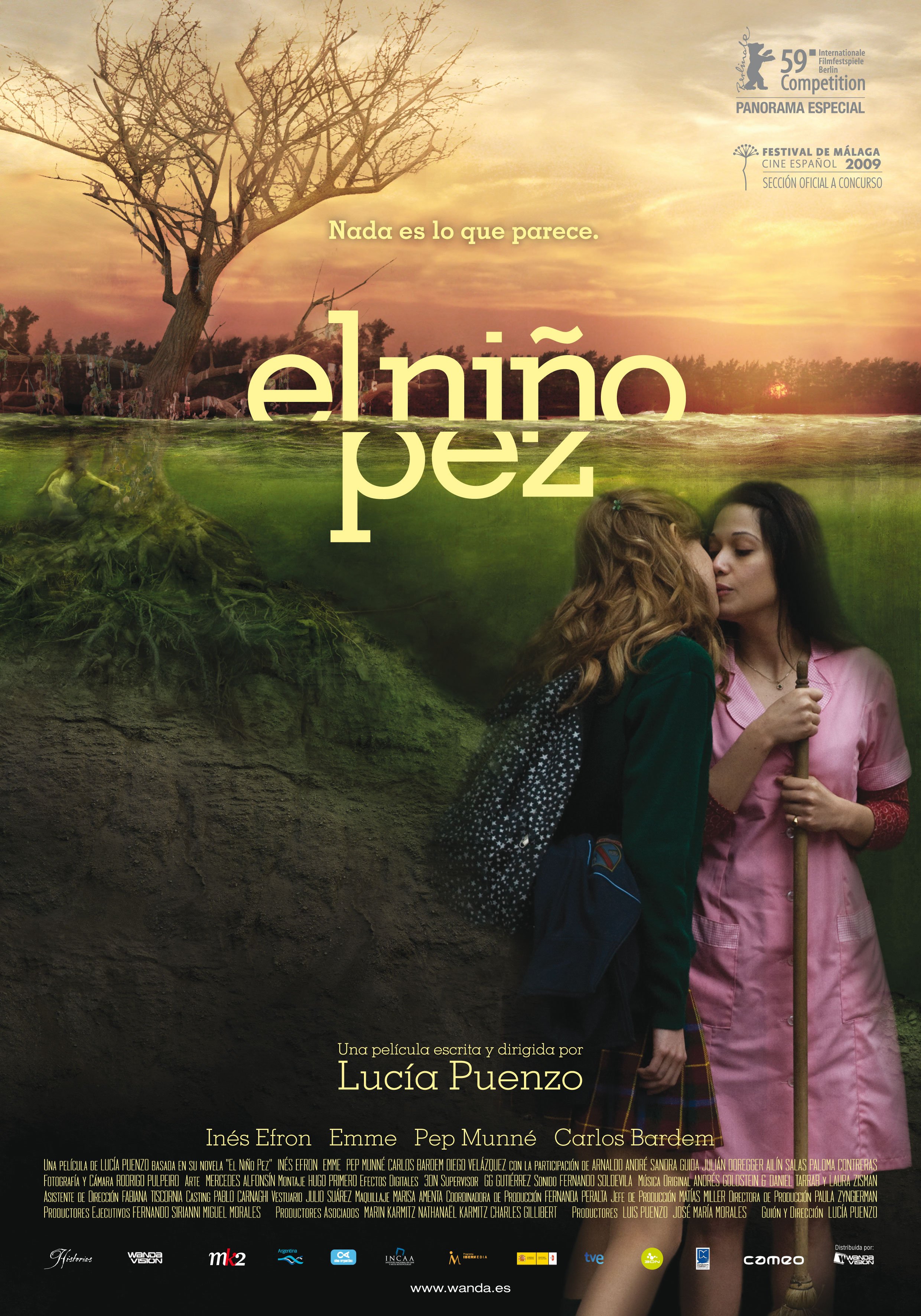
The Fish Child is a genre hybrid in the best sense. It is structured like a crime movie, with a disjointed narrative that jumps around in time. It works like a love story, though, and feels almost like a fairy tale with definite fantastic elements. This could become chaos, but Puenzo manages to make each part emphasize something about the others, and that is beautiful.
It also gives the film space to be interpreted in many different ways, starting with the title. Depending on which genre lense you put on, you will reach different concluions about what it all means. Towards the end, this might get a tad too much, and sometimes a little more clarity would have been fine, too, but it is nevertheless well-handled.

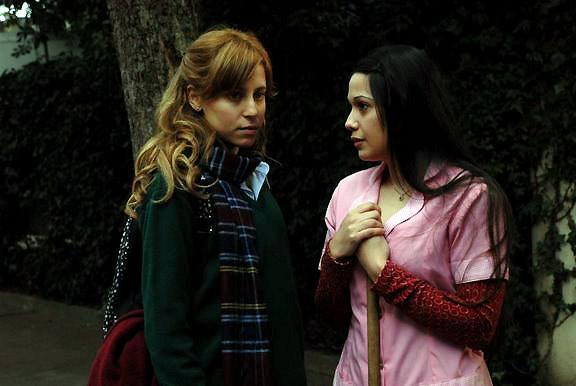
I loved how Lala and Ailin relate to each other, too. In all of her sheltered innocence, Lala throws herself into the love between them, insisting that things have to work out. Ailin has seen and experienced her fair share of abuse and cruelty and is more hesitant. A part of her believes in Lala’s vision, but it is the part she has to fight the most for fear of being hurt yet again. Efron and Vitale do fantastic jobs with both their characters and their relationship with each other.
Puenzo has a good sense for style in her direction, supported by the camera work. But she never puts style over substance, always bringing the narrative back to the nitty-gritty of social reality, a reality that is harsh indeed. But against all this harshness, there is always love and hope.
Summarizing: definitely worth seeing.
 kalafudra's Stuff