Merry Christmas, Mr. Lawrence
Director: Nagisa Ôshima
Writer: Nagisa Ôshima, Paul Mayersberg
Based on: Laurens van der Post’s novel The Seed and the Sower
Cast: Tom Conti, Ryuichi Sakamoto, David Bowie, Takeshi Kitano, Jack Thompson, Johnny Ôkura, Alistair Browning
Seen on: 29./30.5.2025
Content Note: rape/dubious consent, homomisia
Plot:
In a Japanese internment camp during World War II, imprisoned Colonel John Lawrence (Tom Conti) tries to be a bit of an ambassador between the British prisoners and the Japanese guards. Due to his knowledge of Japanese, he has managed to create somewhat of a working relationship with guard Hara (Takeshi Kitano) and the camp director Captain Yonoi (Ryuichi Sakamoto). But their fragile balance is put to the test when a new prisoner arrivers: Celliers (David Bowie) is dazzling and he doesn’t believe in playing it safe.
Merry Christmas, Mr. Lawrence is a well-made film that didn’t age well in all respects, but is still interesting and powerful enough to warrant a watch even today.
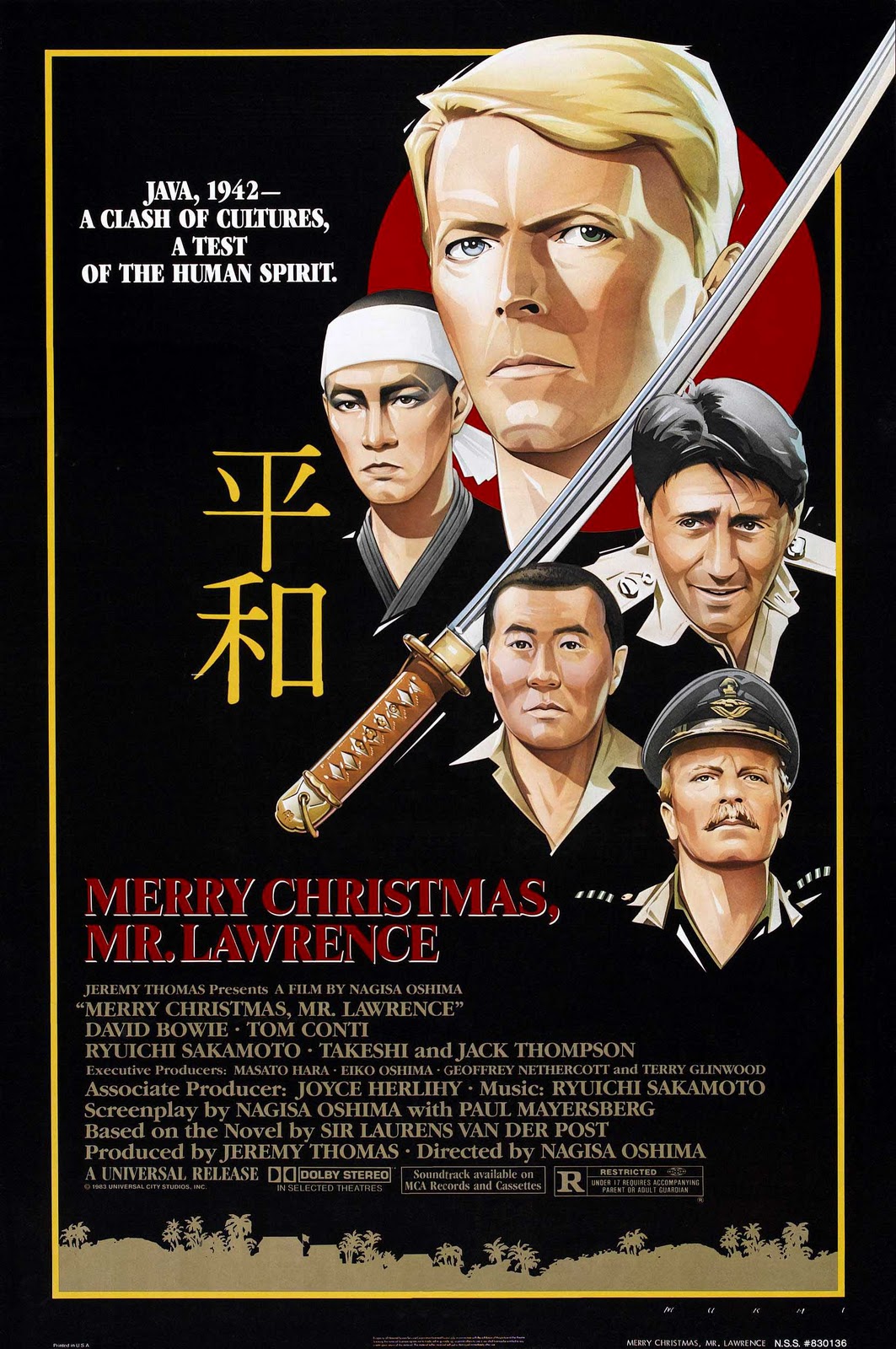
Merry Christmas, Mr. Lawrence feels a lot older than it is, and not due to its historic setting. I can’t really explain it, but I think it has to do with its treatment of queerness. There is a note of repressed homosexuality that is very clear, but never actually made text, apart from the subplot involving the soldier De Jong (Alistair Browning) who is caught engaging in sexual acts with a guard, though it is never really clear whether he was raped or whether things were consensual (well, as consensual as things can get between guard and prisoner). This scene serves to show how unthinkable it was to openly engage in anything queer and – to me – left no doubt on what reading the movie intended of the dynamic between Celliers and Yonoi. But it is still vague enough that you could just read it as the characters feeling mutual respect and admiration, albeit being caught on different sides of a war. (Also, don’t expect a happy end.)
Speaking of different sides, there are a couple of moments where characters proclaim that both sides in this war, maybe in any war, are wrong, and I have to say that there is one side that was definitly more wrong in World War II and we shouldn’t pretend otherwise.
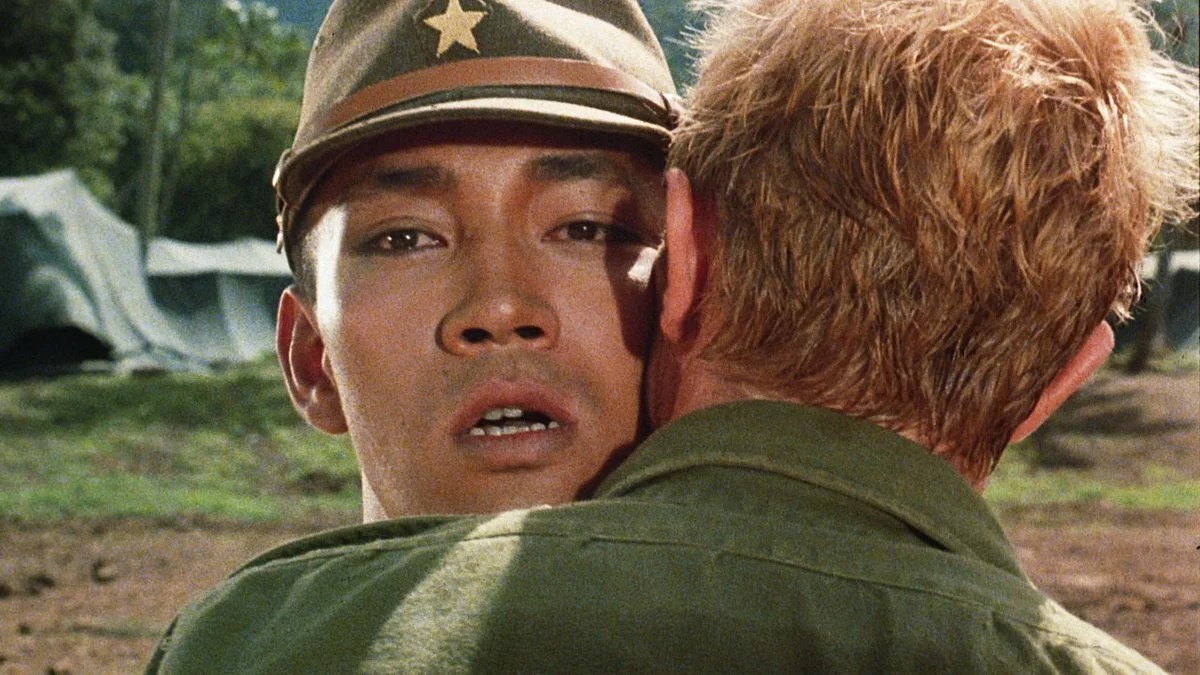
Anyhow, there are two things that will stay with me long after I have long forgotten the rest of the film. One is David Bowie in simply a shiny role. It is no wonder that Yonoi should fall in love with Celliers, it is more a wonder that not everybody does. His bravado and sense of honor, wrapped around a core of guilt – it’s the stuff that romance novels are made of. The second is Ryuichi Sakamoto, for exactly the same reasons. The only difference is, where Bowie sparkles and beckons, making you want to come to him, Sakamoto feels more like exuding his own inexorable gravity. (Tom Conti has a bit of a bum deal next to the both of them.)
I actually do have to add a third thing, and that is the film music, also by Sakamoto. Especially the title song had me sitting at attention straight from the beginning, a beautiful bit of music. Even if there is a certain dustiness to the film, for those three things it‘s still worth seeing today for sure.

Summarizing: still powerful.
 kalafudra's Stuff