Den stygge stesøsteren
Director: Emilie Blichfeldt
Writer: Emilie Blichfeldt
Based on: the fairy tale Cinderella
Cast: Lea Myren, Ane Dahl Torp, Thea Sofie Loch Næss, Flo Fagerli, Isac Calmroth, Malte Gårdinger, Ralph Carlsson
Seen on: 13.6.2025
Content Note: eating disorder, (critical treatment of) (internalized) misogyny
Plot:
Elvira (Lea Myren) has always dreamed of Prince Julian (Isac Calmroth), his book of poetry her personal bible. When her mother Rebekka (Ane Dahl Torp) remarries into an old noble bloodline, Elvira’s chances of actually meeting the prince become much higher. There are just two problems: Elvira is not very pretty, and next to her stepsister Agnes (Thea Sofie Loch Næss), she is uglier still – and beauty is everything at court. When Rebekka discovers that her marriage may be noble, but not particularly wealthy, the pressure for Elvira to secure their futures is up – and Elvira is put through a grueling regime.
The Ugly Stepsister doesn’t exactly tread new ground with its criticism of lookism and the way women are pressured into doing everything for beauty’s sake. But it tells its story so well and with so much passion that it still feels fresh, very exciting and occasionally even funny.
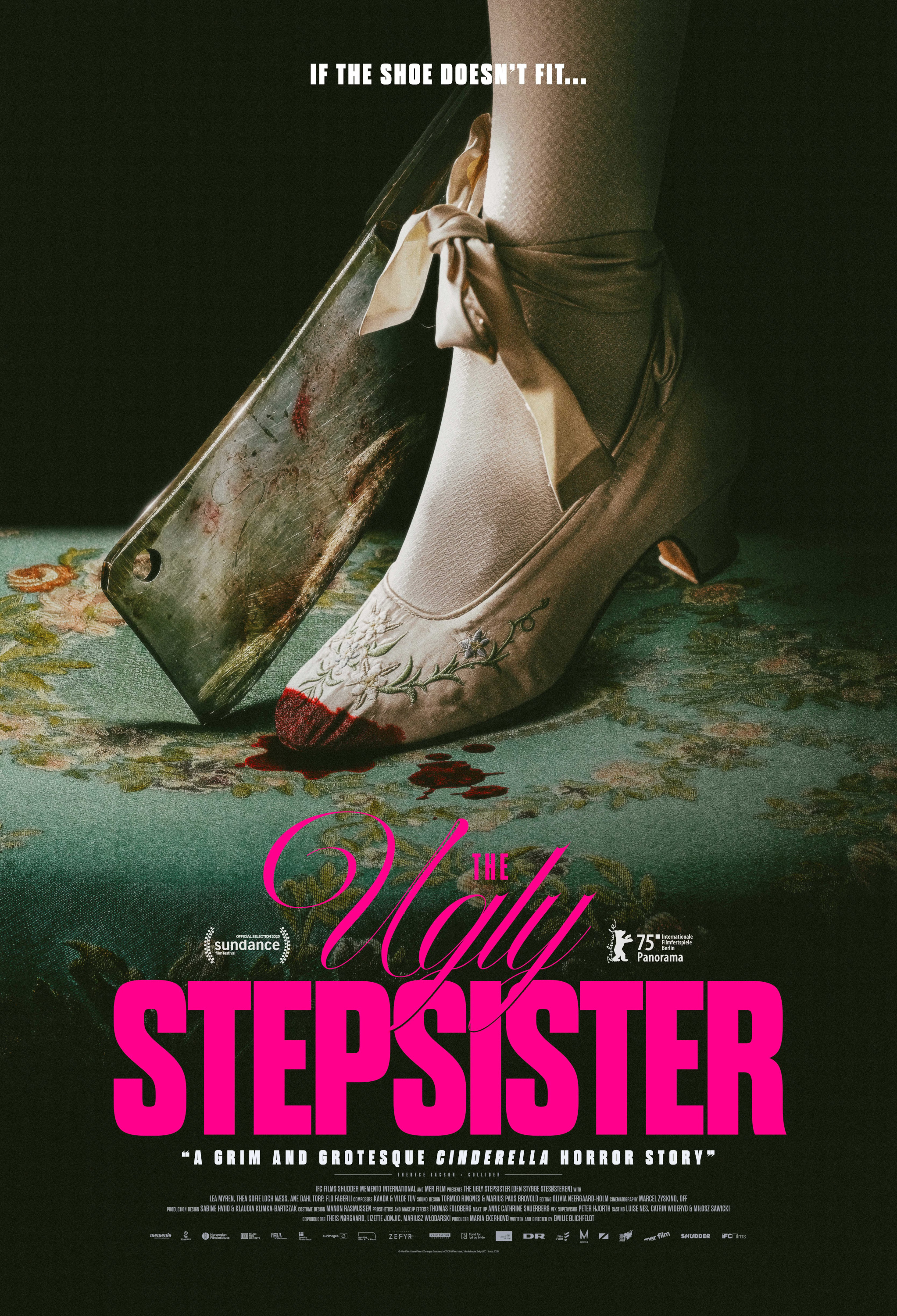
I am very much here for feminist body horror, and it is having it’s moment, as it seems – there’s Raw, The Substance, and now this movie (probably more, these just come to mind quickly). They are each very different from each other, but it is generally nice to see how much feminist horror we are starting to get – and since the body itself is so often the site of patriarchal horror, it is no suprise that the films skew into that subgenre.
The Ugly Stepsister cleverly uses not only the well-known fairy tale as a backdrop to already make us question what we thought to be true so far, but also the fantastic ca 19th century setting to remove some of the ways we have sanitized the violence women put themselves through to try to fit impossible beauty standards. The aesthetic operations Elvira goes through happen without anaesthesia and with slightly cruder tools than are used in the real world, but that just highlights the inherent violence in them. (I am not against body modifications when they serve to make you more you. I myself have quite a few tattoos and used to have piercings – also rather violent, painful things to get. But when you get body mods to fit in with other people’s ideas of who you should be, that’s where the problems start.)

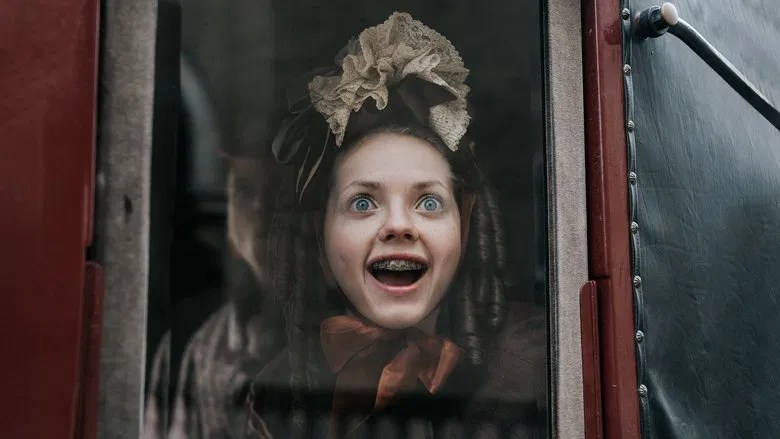
Elvira’s wide-eyed innocence could seem at odds with her will of steel to endure everything, but it is not. She needs to believe the fairy tales (as we all believe, at least partly, societal narratives) to make herself go through it all. Myren’s performance is pitch-perfect, giving us Elvira as a whole entire person, not just a vehicle for criticism. Generally, the film thankfully avoids simple good-evil dichotomies. Roles aren’t just reversed with Agnes being evil, and even Rebekka, arguably the least sympathetic character apart from Prince Julian (an utter ass, making the question of why the women in the film put themselves through everything even more pressing. To win him? BUT WHY WOULD YOU WANT HIM?), is afforded the luxury of the film understanding her lack of options.
It is also a film that looks extremely good – from costumes to set design to camera work, this could come straight out of Disney. Until it really, really can’t. It’s a sight to behold, and a film that completely won me over – and my expectations were high to begin with.
Summarizing: if you’re into horror, watch it.
 kalafudra's Stuff