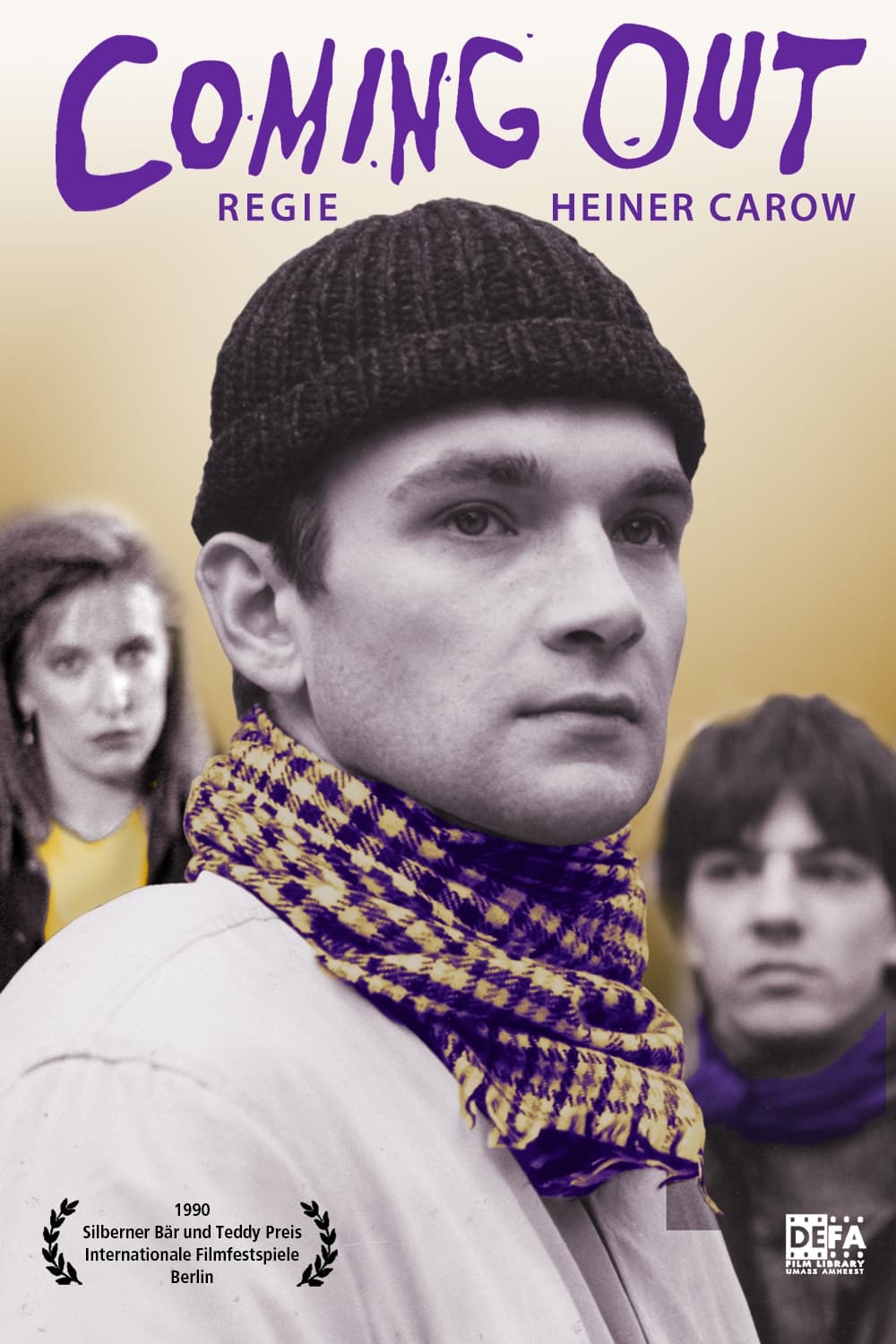
Coming Out
Director: Heiner Carow
Writer: Erika Richter, Wolfram Witt
Cast: Matthias Freihof, Dagmar Manzel, Dirk Kummer, Michael Gwisdek, Werner Dissel
Seen on: 19./20.5.2026
Content Note: (critical treatment of) queermisia
Plot:
Philipp (Matthias Freihof) just starting working as a teacher. When he meets his colleague Tanja (Dagmar Manzel), they connect quickly and start dating. While Philipp should be happy, one night he stumbles upon a queer party where he meets Matthias (Dirk Kummer). Sparks fly between them, and another chance meeting leads them to deepen their relationship. As Philipp tries to figure out what the means for him, his relationships with both Tanja and Matthias becomes very strained.
Coming Out is a groundbreaking film in that it was the first East German film that openly tackles queerness. But it is not only remarkable for being a „first film“, it still very much stands the test of time as a touching, well-made film.
Coming Out is a well-written film with a good cast, a good basis for pretty much everything. It is also a very brave film that explores the many ways that staying in the closet, not being able to live your truth will wreak havoc on both you and the people around you. And it is not afraid to draw a direct line from the nazis and their persecution of queer people to the oppression they still faced at the time.
It is also an interesting historical document and look at the queer community in East Germany in the 80s. Hidden queer parties and a flourishing scene show us the ways that people were able to express their truths despite everything.

For me as a bisexual, it was a little frustrating that the story is framed as „Philipp is gay“, although he obviously has a very loving and sexual relationship with Tanja. Coming to terms with bisexuality is just as much worth talking about, and at least now, almost 40 years after the film came out (no pun intended), we should starting about the story in those terms, I think.
In any case, it is a film worth seeing that had me hooked for sure. I was rooting for Philipp, and in the end, the film even allows for somewhat of a happy end, even if not for a happy romance, which is more than many other films allow.

Summarizing: very good.
 kalafudra's Stuff