The Quaint Convictions of Kit Bennet is a gender-bent, queer retelling of Jane Austen’s Pride and Prejudice by Ally Hastings.
Finished on: 17.7.2026
[I won this book in a LibraryThing Early Reviewer give-away.]
Plot:
Christopher, Kit, Bennet is the second son in a family with five sons, and not many means. Their father is desperate to see them all well-settled, but Kit knows that marriage will never be in the cards for him. However, for his older brother John, the news that their neighboring manor is finally let again, promises a lot: Miss Charlotte Bingley is charming indeed. In her company is also the reserved and somewhat arrogant Mr. Fitzwilliam. Kit is equally drawn to Fitzwilliam, and irritated by him. But irritation soon wins out – and Kit has to fear for his brother’s happiness to boot.
The Quaint Convictions of Kit Bennet tries to flip the genders of most of the characters in Pride and Prejudice, prompting a whole slew of changes that show just how entrenched gender is at all levels of society here, even if not all aspects work in the end. And it is also a very nice, well-written romance that is just enjoyable to read.
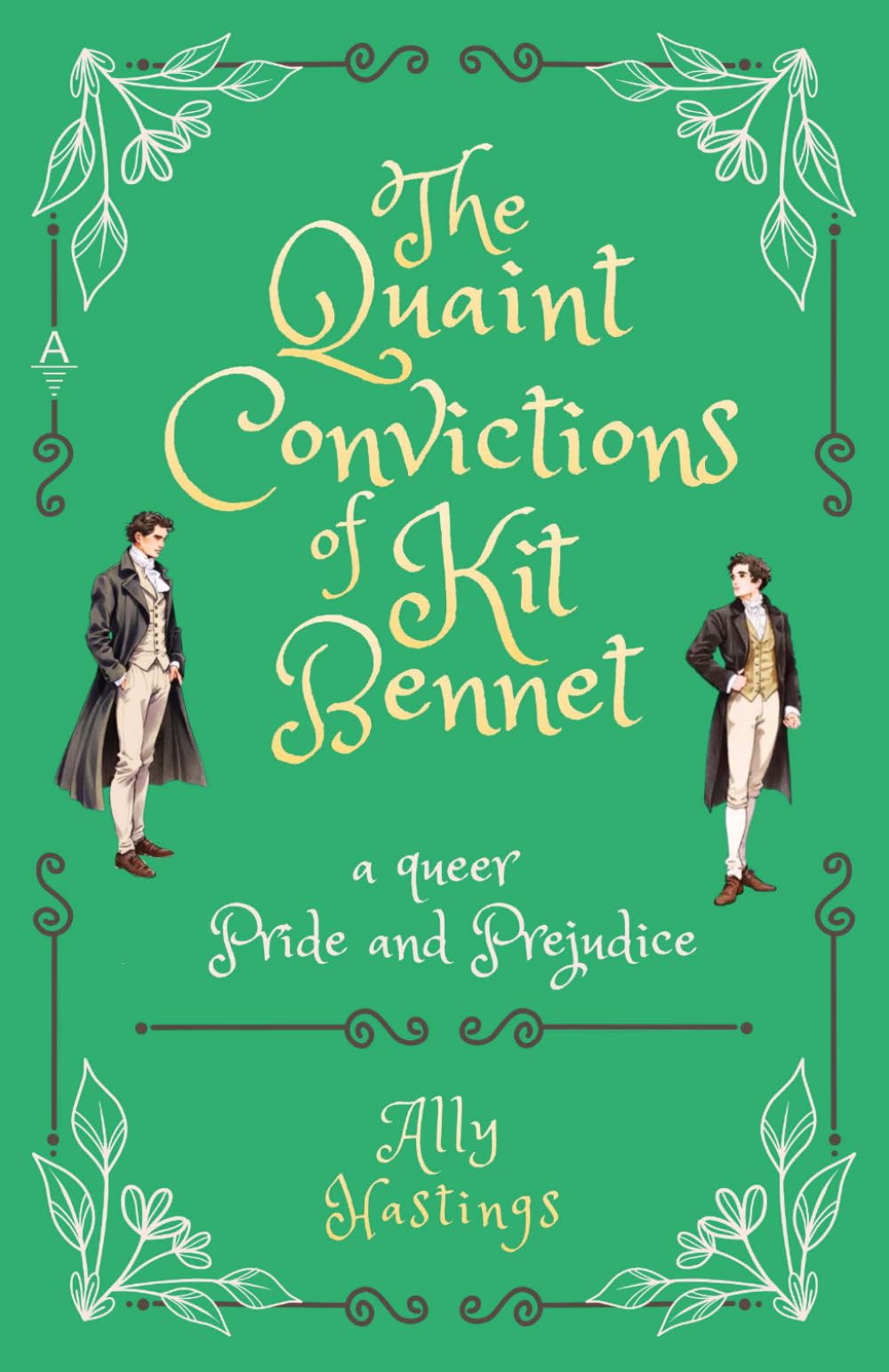
The Quaint Convictions of Kit Bennet is quite an undertaking: in Austen’s deeply gendered world, it is hard to just switch some characters’ gender around (something Hastings admits in the introduction, too). Some of the solutions here work, others fell a little flat for me, and very few left me a little confused, like was it really necessary to have two Louises and a Lewis? Sometimes characters needed to be split in two, because there was seemingly no work-around: you needed the original gender for some plot points. Thus, what I think the gender aspect is most successful at is underscoring just how entrenched gender roles were at the time (and to a certain extent still are). Hastings certainly takes care to not stray too far from the realities of the time.
This makes The Quaint Convictions an interesting exercise for sure, but the question remains whether it is a good read outside of that aspect, and I thought that it is, for the most part, although it is not really possible to separate the two books. It is much shorter than the original, which I appreciated because I am not sure whether I would have wanted to read more of it. But I enjoyed it as long as it lasted.
Fitzwilliam and Kit are engaging characters and I thought that Hastings lets their relationship develop nicely. Wickham wasn’t as well drawn, I thought, he was not charming enough for my taste – the veneer became thin too quickly. John and Charlotte get very little personality, but that’s on par with Austen’s original, so can’t really fault Hastings for that. The Bennet parents were one of my favorite parts, here the gender-swap really works.
All in all, it is a nice read and if you like Pride and Prejudice (which is still far from my favorite Austen novel) and queer romance and gender stuff, you should absolutely give it a go. At the very least, it will prompt some thoughts about the way gender worked at the time.
Summarizing: enjoyable.

