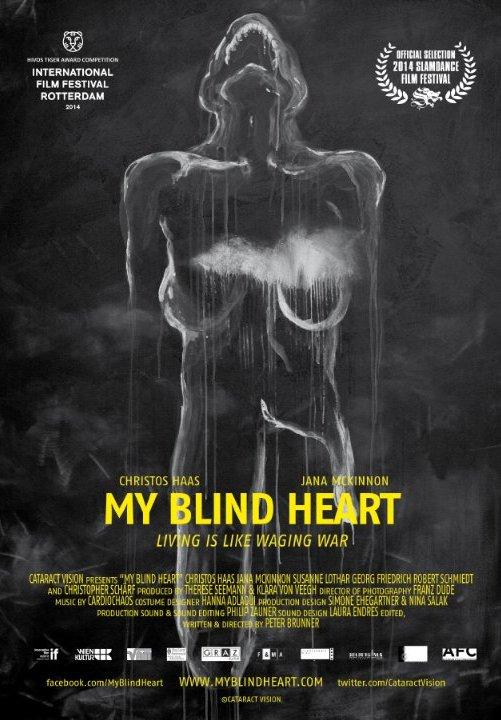
Mein blindes Herz
Director: Peter Brunner
Writer: Peter Brunner
Cast: Christos Haas, Jana McKinnon, Susanne Lothar, Georg Friedrich, Robert Schmiedt
Plot:
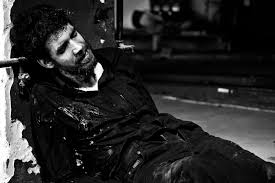
Kurt (Christos Haas) suffers from Marfan syndrome which has taken almost all of his sight and caused various other disabilities in him. After the death of his mother (Susanne Lothar) or maybe even before that, Kurt becomes unhinged. He behaves inappropriately at a home for the mentally disabled (where he’s staying) and gets thrown out. With the last tether to his existence so far severed, he finds himself an abandoned apartment to stay at, together with runaway Conny (Jana McKinnon). But ultimately Kurt is at war with his own body and existence.
Mein blindes Herz is an artsy movie and just so you don’t miss that fact, it’s got a difficult topic matter, it works with metaphors and it’s shot in black and white. That probably isn’t everyone’s thing and it didn’t work well for me. Mostly I just thought that it was too long, despite the many things it had going for it.
I admit that I went to see the film mostly because of Georg Friedrich (who is in it for about 5 minutes, so that shouldn’t necessarily be your main motivation) and he remains the highlight of this film for me, apart from Robert Schmiedt’s performance. I knew that Friedrich is awesome, but I hadn’t heard of Schmiedt before (and I doubt that he has a lot of acting experience anyway – people with Down Syndrome tend to not get a whole lot of roles) and he blew me away with a heartfelt, touching performance that I wanted to see more of.
Christos Haas, who plays the protagonist, isn’t bad either but I have to admit that after a while I just grew tired of Kurt and the film in general. If the film had been a short film (20 minutes or so, maybe), I would have probably been able to go along with it. But as it continued, I lost interest in Kurt’s struggles.
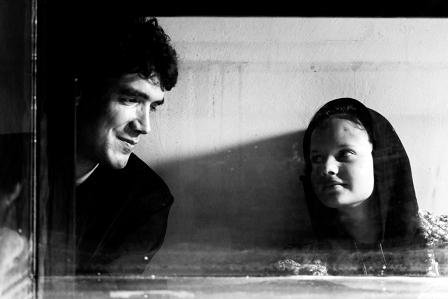 Which might have also to do that I was often a little confused by the film and several jumps in time and location. When Kurt shows up in the care home, I didn’t know why at first. Did he work there or live there? Was that one guy his brother or his carer? How did he get there exactly? And there were several instances where it took me a bit until I was orientated again after a jump in the story.
I also didn’t like that there was so much voice over. It didn’t really help me to understand the film or get more into it (quite to the contrary) and after a short while it got just as exhausting as the rest of the film. It could have been interesting to watch a film that tackles disability in this way. But unfortunately the interesting bits and metaphors (like the parallels drawn between the Flak towers in Vienna that can’t be destroyed but have no place in the modern city anymore either and the way that disabled bodies are treated) got lost in all the noise around it.
 Summarizing: Try it. If you can handle the exhausting bits better than I could, there is lot to discover.
 kalafudra's Stuff
[…] I like it when films leave room for interpretation. But much like Brunner’s first film Mein blindes Herz, Jeder der fällt hat Flügel didn’t manage to use its symbolism in a way that felt deep to […]