Morrer Como um Homem
Director: João Pedro Rodrigues
Writer: João Pedro Rodrigues, Rui Catalão, João Rui Guerra da Mata
Cast: Fernando Santos, Alexander David, Gonçalo Ferreira De Almeida
Seen on: 27./28.6.2023
[Here’s my first review.]
Content Note: transmisia, animal cruelty
Plot:
Tonia (Fernando Santos) is the ageing star of a drag show in Lisbon. She has a young (drug-addicted) lover, and a son, Zé Maria, (Chandra Malatitch) in trouble. She feels the pressure around her for getting gender confirmation surgery, but – being very catholic – she isn’t sure whether she should really do it. To get away from it all, she goes on a road trip with Rosário.
Morrer Como um Homem is one of those films I completely forgot I had watched. In my defense, it was almost 15 years ago that I did. But it is also one of those rare cases where I didn’t realize I had already seen it until I went to write about it here. In any case, back in 2009, I liked it. In 2023, it actually felt rather transmisic to me and I couldn’t get into it anymore.

[SPOILERS]
I think the change in reaction to the film that I experienced has a lot to do with me educating myself on what it means to be trans and what it is to be transmisic. The film, telling the story of a woman who struggles with the transmisia of her church and who can’t imagine being an “actual woman” without surgery, ends up reproducing those same transmisic constructs instead of challenging them.
That Tonia actually dies by the end of the film – due to an infection of her breast implants – and is then buried (according to her own wishes) as a man just hammers home that point: the gender confirmation surgery she did get (only a small part of the possible options) literally kills her. And she is finally at peace when she is presented as a man after all. It is an absurd ending for a film about a trans person, at least in the framing we get here. The movie could have struck more of a note of drama, underscoring the unfairness and the toxicity that Tonia has to face to prefer not to get medical help in time, not to be herself in death. But that is not the emotional tone that I found in the film.
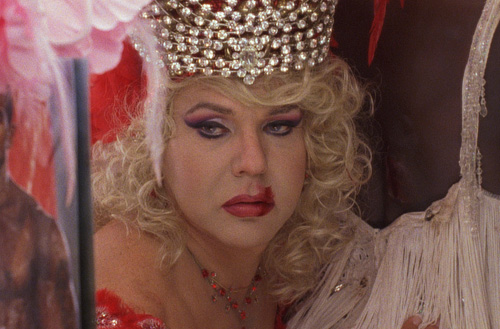
But then again, I found it hard in general to get an emotional connection with the film. I wanted Tonia to grow some spine and kick Rosário all the way out of her life, especially after what he did to her dog (instead the film gives us a romantic ending for the two). The entire subplot with Zé Maria felt confused and out of place, and I couldn’t really connect it with the rest of the film in a satisfying, meaningful way. And it all just started to drag on me. I actually paused the film midway through and continued watching it the next day, all the while wondering whether I should finish it at all.
I do wonder whether any trans people were involved in the making of the film in any meaningful way (from what I gather, Santos is a drag queen but not trans himself, though I might be mistaken about that). I have a sense that things would have looked different if there had been.

Summarizing: doesn’t hold up.
 kalafudra's Stuff